
National Disaster Risk Management Council Meeting
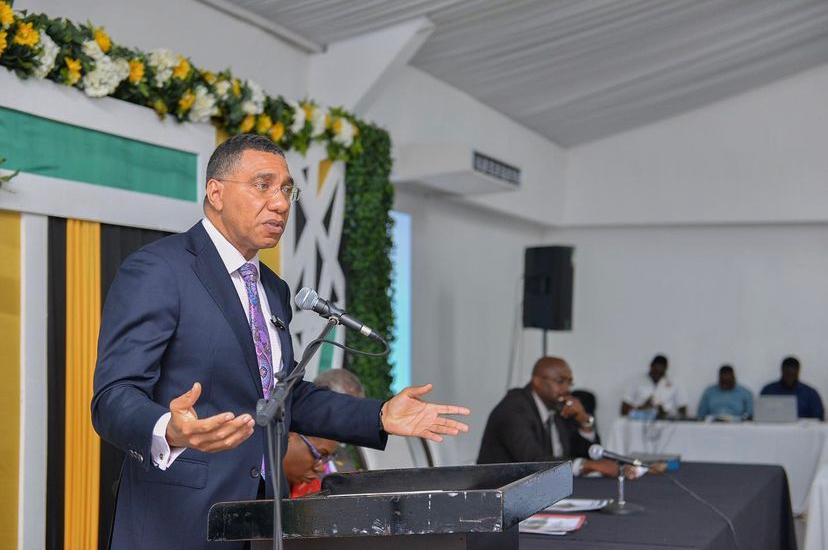
Remarks
By
The Most Honourable Andrew Holness ON, PC, MP
Prime Minister of Jamaica
At the
National Disaster Risk Management Council Meeting
On
June 1, 2023
___________________________________________________________
Good morning, everyone, allow me to part with salutations. We meet here each year to review our plans to ensure that we are ready should a natural disaster hit us, particularly a natural disaster of a national scale. It is an important meeting each year because it sets the tone for the government and that tone is preparedness. If we fail to plan, then you know the other side of that equation and failure is not an option. So, I do not need to go any further with my speech minister; I could take my seat. An important element of organization is to bring the people who occupy the functions to what is called a mind share. The government of Jamaica, like any other government, is complex with many different functions held and executed by many different people with diverse outlooks, and different motivations, but for the organization to work on a common challenge such as a natural disaster, all its leaders in particular must be of a shared mind. And so the purpose of this gathering as you would’ve seen in its structure is that the leaders are able to share their plans, share their policies, share their concerns and their challenges, and to share strategies to overcome them.
Now, fire has their own set of plans and strategies. The NWA has their own set of plans, challenges, and strategies to overcome; other organizations, such as the NSWM is also critical but no one entity can respond wholly and solely to a natural disaster that is on a national scale. The entire government must respond and therefore we meet like this so that we can understand what each other is doing and integrate some of that knowledge into what we are doing and for an amazingly simple reason as well, we need to know each other even just a first visual identification at the leadership level. We often take it for granted that we are all in the same government, we should know each other. Sometimes that is not the case, positions change all the time. People who hold these positions get promoted out. They move laterally to other positions, or they leave the organization, so we need to at least once a year meet to see each other. One would also hope that when we gather for lunch or we gather at the provisions for break, that we get to know each other as well just from a social perspective because that eases the potential obstacles that could exist in an emergency when tensions are high and people have to dispense with diplomacy and courtesies that we know each other.
This meeting is especially important on several levels to get us prepared, and I came to that conclusion and understanding when the pandemic hit. Minister, you will recall us calling together and all entities of government would have been required to play some part in the pandemic response; so, I just thought I would set that context. Now, Jamaica like many Caribbean countries are extremely vulnerable to natural disasters, and the human and economic costs are substantial. According to the International Monetary Fund, Jamaica’s exposure to natural disasters rank in the top 20 globally and this is primarily due to our low-line coastal zones which is where most of our population exists, and our five major fault lines and I was very, very pleased to see the presentation from the Seismic Unit. It gave me a sense of comfort and relief that we do have some capacity in monitoring seismic action in Jamaica. Maybe not at the capacity and level that we would want, but certainly we do have capacity.
Now, Jamaica has withstood approximately forty natural disasters of a national scale between 1950 and 2017, and that would be about one disaster per year. Sixty percent of these were hurricanes and storms. These storms were accompanied by significant flooding. Severe drought was another feature of our disaster profile, and epidemics was another feature of our disaster profile. In fact, floods, droughts, and epidemics accounted for about 40% of our natural disaster profiles since our independence in 1962.
Now, adequate procedures to deal with disaster situations and relief measures must be planned well in advance of the actual disaster even starting with of course, strong, and effective legislation. And the legislation is necessary to ensure that the various leaders of the disaster response are clear on their roles, responsibilities, and their duties in law. What you would not want to happen in a disaster is for someone to be saying this is not my role, it is your role; that would be the start of another disaster.
One thing we can then be proud of is that we do have a very well-structured legislative framework to manage disasters and in fact, our gathering here is because of the requirement in our legislation, so we are fulfilling the legislative framework to execute our response.
So, all of you here who are leaders will lead the disaster response. You know what your responsibility is but more than that, everyone else knows what your responsibility is so in a disaster, there can be no passing off of responsibilities because legislatively we have settled that but the legislation also calls for us to build a community understanding which is separate and apart from what is legislated. This community understanding is that all the leaders are together, they share the perspective of the response, and they are motivated to respond, which is the purpose of this gathering.
So, careful planning must be put in place to coordinate the use of human and physical resources to save and sustain lives and to protect property and physical infrastructure but there is a word that has become very well used in our vocabulary these days, and that is called resilience. So, the purpose of preparedness is to recover quickly. So, in our framework legislatively and in terms of our organizational posture is that we expect that there will be a disaster, we expect it. We do not know when it is going to happen, but we have put in place various systems to help us to monitor, to track data and to predict and have experienced disasters before we know how to pre-position for disasters. And putting all those together, the collection of data, the legislative framework, the ability to predict, to pre-position our responses that will help us to recover from the disruption and dislocation of a natural disaster when it happens and the idea is not just to recover, but to recover quickly and of course, we have added some things to it; recover stronger, which we have done from the COVID-19 pandemic. We have recovered stronger without question. Now, the veering hazards have impacted countries all over the world, but the impacts have been greater on small developing states, in particular small island developing states. And not only has the impact been greater, but the frequency of disasters has been greater on small island developing states and I want you to consider this. When Katrina hit the United States, did it shut down their economy?
Just a small impact on their national economy but look at the dislocation of the hurricane that hit Antigua and Barbuda; it was in 2018. It wiped out their entire economy. When Hurricane Gilbert hit us in 1988, it wiped out 30% of our GDP so you can see that the risk of disaster to a small developing country, particularly a small island developing state, is far more significant in its disruptive nature than it is to larger countries.
The lesson from that is that we need to take planning for natural disasters far more seriously because the impact to us is existential, meaning a natural disaster could potentially wipe out the country so this is how seriously I would want all the leaders of the various entities that are critical to the national response to treat disasters. That is how important you are to the process of responding to disasters and ensuring our resilience, our ability to recover.
Now, in addition to the conventional responses to natural disasters, making sure fire, police, military, your works entities, your central organization for disaster response, our ODPEM; all the other entities that are critical to a disaster response, in addition to that, what we have noticed, and particularly for resilience, is that the Ministry of Finance is actually a very critical entity in disaster response, absolutely critical. There is a dimension to disaster response which is called financing. Our Minister of Education is saying rapid financing, but I want to just transition your mind a bit.
Disaster financing is critical. Now, disaster financing, it is not financing when a disaster hits, that is not what it is. And traditionally, what we have done is to believe we can self-insure, meaning that if a disaster hits, then all we do is to reallocate from existing needs and spend on recovering from the disaster. But in countries like Jamaica that are constantly facing disasters, what happens? The disasters impact your GDP significantly, reduce your productivity which reduces your fiscal wherewithal, the ability to finance public expenditure and then you end up doing what? You end up borrowing. So, yes, a large part of Jamaica’s debt situation was because of profligacy, you know, own public finance management but another part of it was that we were impacted on a yearly basis by a natural disaster for which we did not plan financially. So, we have taken this administration have taken a different approach to disaster risk management, particularly on the financial side of things. And in fact, we have developed the National Natural Disaster Risk Financing Policy, which there was quite a significant process of consultation. I am certain that everyone here participated in some way in the development of that policy or contributed to that policy. We have developed this policy and it has guided us in what we have done in terms of our approach to disaster risk management. For the first time, we have created buffers within our budget so that we are able to respond to natural disasters. Our response to the COVID-19 pandemic was very quick, amazingly effective, and we were able to recover very quickly and much stronger than we were before because we had buffers. We had financial buffers. We took out of the budget and made provisions for the establishment of a fund, so we did not have to borrow.
Now for the average Jamaican, this is like, so what? But this was such a fundamental change in how the Jamaican economy responded. If we were hit by the COVID pandemic in the nineties or the early 2000s, what would have been our situation? I am saying this because it is important that the country appreciates positive change that is happening right before your very eyes, that you may not see it in that context, but Jamaica today is a much stronger Jamaica than it was a decade ago.
And I give you a little perspective. We had an epidemic in 2014, that was the Chikungunya (Chick-V). Do you recall that? And that was just minor compared to COVID and you recall that for a couple of days, all public offices were shut down because people were infected and had to stay home and the impact that had on our economy. And of course, there were issues about how the government should respond to this, or could the government respond? There was literal panic. Other people may not remember this, but I just thought I would bring it back into public consciousness. But compare that small, small health scare to the COVID pandemic and how the government was able to respond primarily because our fiscal situation was different. Now, in line with our new policy of disaster risk financing, in 2021 Jamaica became the first country in the Caribbean and certainly, the first small island developing state to issue or sponsor a catastrophic bond. The bond is effective up to, it is for three Atlantic Tropical cyclone cycles so that would end in December 2023. And in the event of an event that qualifies for payout, Jamaica would be protected up to US185 million dollars in rapid response in terms of financing. So, we are not only building the fiscal buffer, but we are also getting insurance in place to ensure that if something were to happen, we could respond rapidly and that is resilience building. However, it does not mean that we should be profligate. In other words, we must manage the disaster such that we do not spend what we do not need to spend. So, I just thought I would bring this within our domain of understanding, so we appreciate the various dimensions of the government’s policy for being able to respond to disaster and give confidence to the public regarding the continuity of business in Jamaica. Now I must do this part of my presentation. It is especially important as I now turn to our preparedness for our hurricane season. Now, I say to the public, in the event of a disaster, whether it be a hurricane or God forbid any other disaster, plan your evacuation route well ahead of time. If you live on the coast or in a low-lying area you may have to evacuate in the event of a major storm or a hurricane. While you will undoubtedly get instructions from ODPEM and the MET office, they usually send out these warnings over public transmissions, you need to create your own evacuation plan well in advance of a disaster strike so that you will know very quickly what is not just your route, but how you are going to utilize that route. So, I am therefore making the appeal for Jamaicans living in low-lying areas of our coastal zones, make your evacuation plans early.
A hurricane, while you may be given a day or two notice when it happens, the surges can move very quickly. God, forbid, if there is an earthquake, and you are on a low-lying area, Tsunamis are a possibility, and they happen very quickly. So, I am urging all Jamaicans as part of our preparedness, bring your family together and say, all right, if this were to happen, which is the best route we should take? And where is the best place for shelter? So, you want to know where the approved shelters of the government would be, and those would be extremely easy to ascertain.
ODPEM always has a list of shelters. You know that schools in the area are usually used as shelters, but sometimes you may want to also say, all right, I have my uncle that lives up in the hill, and so I might have to get to him and so you might want to call him up and say, you have that room ready for me? This is a part of your evacuation plan. You always need to have some emergency supplies on hand. In today’s economy, it’s difficult sometimes for some households to buy more than they need, especially households who are on a limited income or no income at all, and they live from day to day but for those of you who can, and even for those of you who can’t, it is absolutely important that you put aside even two or three days of food supplies. Make sure you have water, some number of canned foods, some number of dried foods that can last without refrigeration. Put together a small emergency first aid kit. And I am not saying that you must go out and buy an elaborate toolbox with all kinds of first aid and medical supplies. Make sure you have your basics; you have some band aids, alcohol, your flashlight, and if you have medication that you have to take. Make sure that you have those supplies. All of you know what to do, so why we do not do it? But I am, urging all Jamaicans to start to think in this way as we approach the hurricane season. Of course, you want to make sure that you can secure your critical documents. Ziploc bags are amazingly effective, a simple way of protecting them from water and other hazards so you might want to start to look at how you can secure your critical documents. Now, not many people insure their property, but again, in terms of our financial readiness, this is something that we ought to look at so I’m encouraging Jamaicans to explore the options that are available for insurance financing for your property and to ensure that if you do get insurance, that it is adequate because sometimes people take out insurance and they find that it is inadequate. So, make sure that if you decide to do that, your insurance is adequate.
And for those of you who have insurance, it is always a good idea to check now to make sure that what you originally contracted to is presently sufficient for recovery. Then I would say take steps to protect your home and valuable properties. So, if you live close to a storm drain or a gully, you want to make sure that your parish council is aware if the invert is undermined or if a tree is growing in the gully that could potentially block the flow that could create flooding. You need to be initiative-taking in this regard to make sure that any civil infrastructure that is close to your home, which could create a problem for your home, that you are initiative-taking in ensuring that those are addressed.
In today’s world we are very pro strategies for climate change. I am not encouraging the cutting of trees, however, if there is a tree that could pose a threat to your home, you should take steps to as much as possible ensure that you preserve the tree, but that the tree does not destroy your home. So, you figure that one out. It might mean you have to limit but you would not take that decision lightly. And of course, if it is close to powerlines, you would want to inform the utility company of the threat that the tree poses.
If you are currently building, ensure that you are following the building codes. Our building codes are, I would say, one of the strongest in the region. Yes, since Hurricane Gilbert, everybody is using a slab roof instead of a zinc roof and our building culture is overbuilt so we have invested heavily in concrete and steel. There is no question in my mind about that, but still, if you have timber roofs, ensure that you put on hurricane straps. Just that simple action alone could save you significantly, but an important part of your building is to make sure that your structure assists in your sustainability. So yes, in a hurricane you have a deluge of water, but after the hurricane is over, you are likely not to have potable water so you must in building, ensure that your building captures water and can store water.
So, my encouragement to all Jamaicans is to have your water sustainability strategy integrated into your housing strategy and we are moving in that direction. We will be giving out several thousand tanks to households that are assessed to be in need. And we will be building out a strategy for catchment, which would help to convert some of those tanks into rainwater harvesting strategies. We are doing our part and we encourage all Jamaicans to do their part. So, with those encouragements, I bring my presentation to a close and to repeat that as leaders, you are important in our national response. The national response must be unified. The national response must be in keeping with our legislative framework, and you as leaders must be motivated enough, informed enough and strategic enough to bring our national plan to fruition in terms of our response.
Now, once we get the leadership level right, then the resource mobilization element of the response will be there in tandem to support you as I have outlined, that through the Ministry of Finance, we have developed our disaster risk financing strategy. So, we will have the leadership together, and you will have the resources together. And in terms of human resources, the leadership resource is critical to give direction and leadership. I have seen our mobilization at work, and it requires long hours. Sometimes you must be away from your home. In other words, in the disaster, you must leave your family to man stations to ensure that other families are protected. That doesn’t happen if within the organization, there is dissonance, that when the leader of the organization picks up the phone to call the subordinate to say, listen, we need you here, the subordinate just says, I never saw that call, but if we are all of a mindshare where we understand the importance of our role, you don’t have to worry about that. So, if the leader of the organization picked up the phone and did not say good morning or good afternoon, it is not an issue because you realize that in this environment of emergency, those things do not matter now. And so, this is that process that we are trying to build there, that in the event of an emergency, our team works together in unity for the national good.
People, I thank you.