
Government Prioritizes Infrastructure to Unlock Housing, Jobs, and National Growth
The Government of Jamaica continues to advance its vision of a well-connected nation through deliberate, long-term infrastructure planning that will ultimately improve the lives of all Jamaicans.
Prime Minister Andrew Holness says road expansion projects such as the proposed North-South Highway extension are key to unlocking housing, productivity, tourism, and economic opportunity.
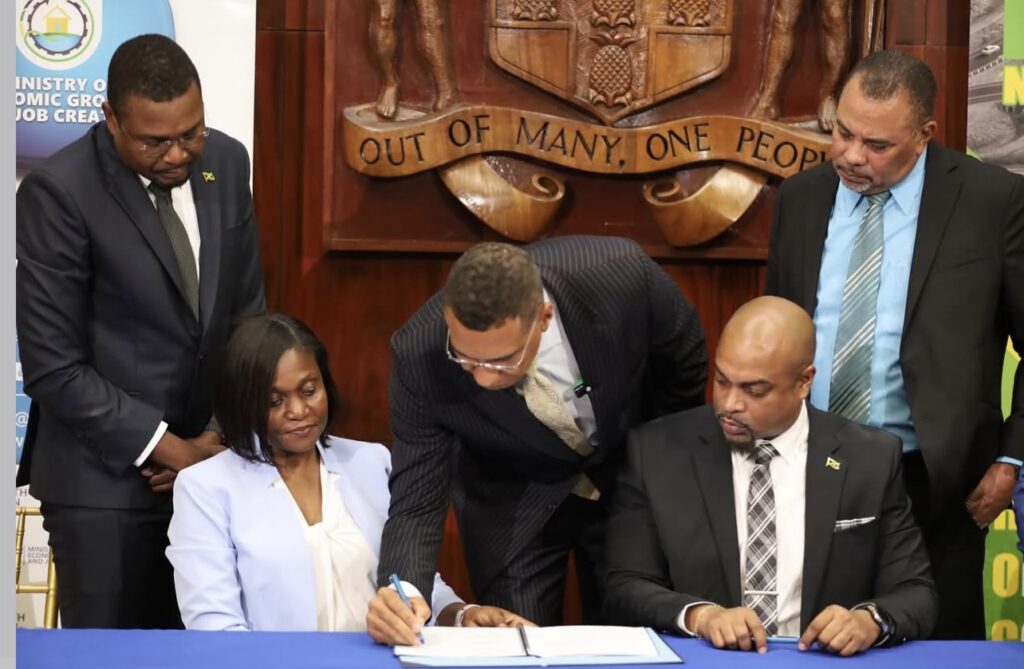
Speaking at the signing of the MOU for feasibility studies to extend the highway both westward to Discovery Bay and eastward to Tower Isle, Prime Minister Holness said the expansion is part of a broader push to prepare Jamaica for orderly, inclusive development.
“We cannot allow development to outpace critical infrastructure. That has been the problem in Jamaica. Private developers have said, I want to build this, I want to build that… but the infrastructure has lagged behind,” the Prime Minister noted.
Dr. Holness explained that the area between Mammee Bay and Discovery Bay is experiencing a boom in housing and commercial activity. Dr. Holness said without supporting infrastructure, this growth can lead to congestion, inadequate services, and unsustainable expansion.
In addition to relieving traffic congestion, the highway extension will open new lands for structured housing developments and give the Government greater control over planning and zoning in these rapidly changing areas.
“The extension of the North-South Highway will create new lands for housing opportunities and other developments, which will ensure that the government can have a more direct and strategic intervention in the planning of the area.”
The Prime Minister said this proactive approach will enable the creation of well-planned, livable communities supported by reliable road access, public transportation, and economic opportunities.
The planned highway extension is expected to unlock tourism opportunities as well in fast-developing areas such as the Mamme Bay to Discovery Bay corridor.
“Take, for example, how this will impact tourism. If you fly from Miami to Sangster International Airport, and then it takes you two and a half hours to reach your hotel in Negril or St. Ann, you’re going to say it’s not worth it. Your road network has to be so well developed that once you come off the plane, you know you’re going to get to anywhere in Jamaica very quickly.”
Dr. Holness continued: “Once Jamaica is known for its seamlessness, then you’re going to get more people coming to Jamaica for tourism… More tourism means more revenues for the country.”
Meanwhile, Prime Minister Holness also underscored the national benefits of a seamless transportation network, not just for private motorists, but also for reducing unemployment and encouraging formal housing.
“It also helps with things like issues such as informal settlements. If transportation is easier, then people don’t have to settle close to where the work is; they can go back home.”
Prime Minister Holness said transportation remains one of the biggest hurdles for unemployed Jamaicans in rural communities who are willing to work but cannot access opportunities.
“Once you put in proper road infrastructure, it makes it easier for them to travel for work. It also makes it easier for the government to extend public transportation.”
This strategy is already bearing fruit, as seen with the expansion of the JUTC’s reach into areas like Mandeville and Morant Bay, following recent road improvements.
Dr. Holness said the Government remains focused on ensuring that roads do more than connect places, but they must also connect people to services and prosperity.
“The intention of the government is to build a highway network around Jamaica so that you can get around the country in less than a day and smooth roads that can connect you to opportunities,” the Prime Minister said.