
Groundbreaking Ceremony for Sygnus Lakes Pen Industrial & Logistic Park
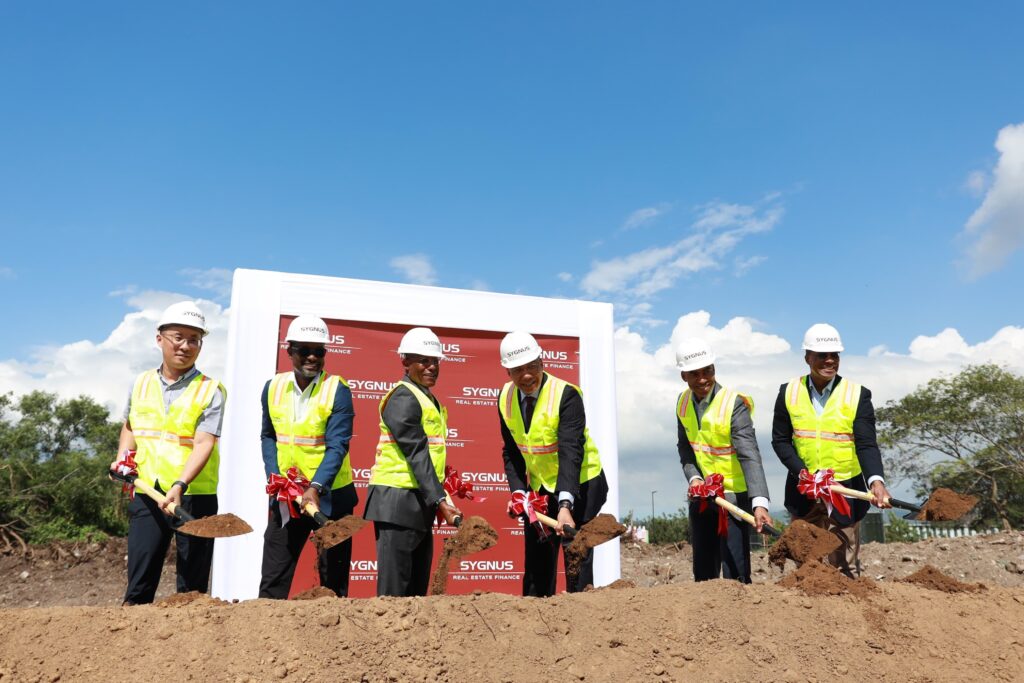
Keynote Address
by
Dr the Most Honourable Andrew Holness, ON, PC, MP,
Prime Minister of Jamaica
at the
Groundbreaking Ceremony
for
Sygnus Lakes Pen Industrial & Logistic Park,
Cow Park Caymanas Estate, St Catherine
On
December 9, 2025
——————————————————————————————–
Members of the Cabinet
Mr Berisford Grey, President and the CEO of the Sygnus Group
Mr Horace Messado, Chairman of the Board of Directors
Brigadier David Cummings, Vice President
Shullette Cox, President of JAMPRO
Distinguished ladies and gentlemen,
Members of the media, good morning and it is indeed a good morning.
As I sat and listened to the presentations, I was reflecting on the damage caused by Hurricane Melissa. It might be of worth to note that since 1960 there have been twenty-two Category 5 hurricanes. Thirteen of those hurricanes occurred within the last decade. 60% of all Category 5 hurricanes since 1960 occurred within the last 10 years, meaning during my administrations 12 Category 5 hurricanes have made landfall since 1960.
Most of these hurricanes would’ve made landfall within the Caribbean or the Gulf of Mexico. Some people know it as the Gulf of America. It’s a good place to kind of ground the audience and to capture your attention that we are indeed living in a time where the climate is an important consideration for business decisions. Indeed, climate is an important consideration for any economic activity. Climate is important to the economy, and as a government, particularly a government of a country that is susceptible to climate events, we exist in a corridor where hurricanes and indeed we are also on a fault line so we will have exogenous shocks that will have what is best described as a balance sheet impact. Things will happen beyond our control that will impact our balance sheet. Either it will destroy assets, or we will lose revenues, it will impact our reserves or cause us to increase our debt so anything that we do as a people, as a society, as a community, as an economy, we must mainstream systemize climate consideration.
I am not here joining the debate regarding whether or not climate change is manmade or it’s natural. Much of this is academic to us. The point of fact is that we are seeing climate events, particularly hurricanes of greater intensity with greater frequency and oftentimes overlapping. That’s our reality, so you need a government that appreciates this fact and can make policy to ensure that our country, our society, and our people are able to withstand this developing phenomenon of our existence, and the best way to describe this is resilience building.
This administration has focused heavily on resilience building, but resilience is not a word in the political vernacular. Governments get no credit for building resilience. Nobody goes to the polling station and say, I am going to vote for the government that put resilience in our fiscal arrangements. Nobody votes for the government that ensures that we put in place the financial arrangements to withstand climate shocks to recover and recover better, build forward, and build stronger; that’s not a consideration.
However, my firm belief is that after Beryl and then Melissa, more and more Jamaicans are beginning to pay attention to this conversation about the impacts of climate change and what it means for our survival as a small island developing state. You see, the realities for larger countries that are also impacted by climate events is that if Hurricane Katrina struck Mississippi, New Orleans, the impact on the American economy would probably be one or 2%, maybe let’s say 3% or 4%, the impact on the Jamaica economy would be double digits as we have seen with the impact of Hurricane Melissa. The point I’m making here is that every citizen, every Jamaican must now become aware about the impact of climate and it must become part of our political economy, meaning the things that we vote for because it is important like all the other things we consider politically important: wages, security, health, education; it is just as important if not more.
We heard some terms used from this podium, one of which would be the continuity of government or the continuity of business. For small island developing states, these weather events pose a real threat to the continuity of government and the continuity of business. One event could knock out the capability of government to respond, to stand up, get relief and assistance to those in need. It could knock out, if not totally destroy the ability of businesses to recover and start again. One weather event could end a business totally and we have seen this in Melissa. Many local governments were totally knocked down. They could not stand up and respond.
And indeed, as a result of Melissa, many businesses will end. They will not be able to restart. So, for the average person seeing the hurricane and say, oh, it’s wind and rain and it took off my roof, that’s just a part of it. The impact of these high intensity, high risk events is that it could end life as we know it. And I don’t mean to sound as if I’m trying to create fear or being dramatic. This is the new reality.
Thankfully, your administration has been preaching this for a very long time. If you go back at all my presentations, I have been speaking about resilience and building resilience and ensuring that we have continuity of government. Brigadier you were there when we raise those issues, when we asked the Disaster Risk Management Council to prepare a continuity of business plan but the most important thing that we have done is to build resilience in the country’s financing.
And how did we do this? One, we controlled our borrowing. Reducing the debt to GDP ratio ensured that when we really needed to borrow, we could get access to funding. But more than that, we could get access to funding at the best rates because we established ourselves as good managers of resources and lower risk.
The second thing we did is that we had a scheme of preparing for disasters and essentially, it’s a straightforward scheme. There are two kinds of disasters that will happen. You have high frequency, low intensity events. You can expect that every year we’re going have a rainy season, every year there is going to be flooding. We may be impacted up to the level of a tropical storm. We prepare for that. Every year we know we’re going to have droughts, and so we have to provide for that. And how do we provide for that? Well, for the first time in decades, we established and funded the National Disaster Fund so every year we set aside for that. In effect, you can say we put aside savings for that. If your economy isn’t doing well, you can’t save for disasters, so we set aside savings out of our revenues.
The second thing we did is that we set aside a contingency and we have that contingency, which is where we have been spending from in the initial response to the hurricane, almost about $5 billion. Meaning we set aside from cash flow. Savings and cash flow, we target that to low intensity, high frequency events but then there are some events that are high intensity, low frequency, and for that we use insurance like the CRIFF (Caribbean Catastrophe Risk Insurance Facility) fund that is there. And for really high intensity, low frequency events, we have the catastrophe bond, so you see how we have structured our financing. In other words, we have crafted our economy to incorporate the risk of climate damage.
Nobody gives credit to the government for that, but it has served us through all the tropical storms, through all the floods, through all the droughts. We didn’t have to borrow a cent, and it served us well during COVID. And during COVID, we went through our contingencies and we went through our disaster fund, but we ended up having to borrow, but we were able to get the kind of borrowing that was not stressful on our economy and so apart of the strategy of dealing with these disasters is to also have contingency borrowing, meaning that should a disaster occur, we get access rapidly to prearranged debt. You can’t get access to that unless you have established that you are a good well managed economy and so we have put in all of these measures to ensure that if we were hit by the worst event, and by the way, Hurricane Melissa is one of the three strongest hurricanes to have impacted anywhere in the world. I believe the strongest would’ve been in the Pacific, Hurricane Melissa would’ve been the second strongest in the Atlantic so it’s in the top three.
There’s a lot of discussion about the government’s response and all the other issues that you hear. The fundamental is that Jamaica was struck by one of the strongest hurricanes causing some of the worst ever damage in Jamaica’s history and we are certain as to where the recovery and reconstruction will come from and how it will be funded. That is a massive achievement for a small island developing state. Jamaica was considered the case study of debt reduction. Now, we are going to be considered the case study of reconstruction and resilience building after disaster.
So, I wanted to put this groundbreaking in context, and we give God thanks that though we were struck by the worst hurricane to have hit us, most devastating, we can stand here today and say that business continues. Sygnus is breaking ground on a 55-acre property to develop a logistics operation that will add value and dimension to Jamaica’s logistics aspiration. Business continues in Jamaica.
Having made that point, the reconstruction effort cannot be limited to the parishes and communities affected. So the notion is not merely about building back what was damaged or what was there. The hurricane is a message to us that there are areas of weakness in our infrastructure, in our social systems, in our society that we must address and so the idea of mainstreaming resilience, not just in our financial management of the economy, but in the infrastructure across the country, because God forbid that it were- let me not even put it in the atmosphere. Don’t even say it.
When we are going to reconstruct Jamaica, we also must now look at the vulnerabilities that could have impacted the continuity of central government, the continuity of businesses that could have dislocated critical infrastructure to maintain connectivity around the island. The reconstruction effort will involve resilience building, which may not necessarily all be concentrated in the area of damage.
We have to look at the drainage system in Kingston to avoid the potential of flooding in certain communities. We have to look at our electricity grid, what can be placed underground, what can be limited to microgrids; all of these are considerations. We have to now consider as we had started backup power for water production and distribution, backup power for our police stations, which should have been but wasn’t. We have to consider where our hospitals are located. In Hurricane Melissa, three of our hospitals all located on the coast were impacted. We have to consider whether or not they should remain there. Both our airports are on the coast and at sea level or lower. The ability for airlift became critical. We just don’t have enough so I’m giving you then a sense of the dimension of reconstruction.
This will be done with incurring significant debt without question, but debt is one side of the ledger. The other side of the ledger is that we must use these resources not for things that will not create value, but we must use these resources to create significant value.
Our GDP today is US$20 billion. We will have access between what the government will directly use and what the private sector will use to about $6.7 billion. Let’s use that in a synergetic way to add greater value to our GDP. Let us make the commitment that by 2030 coming out of this, our GDP could move from the US$20 billion to maybe 25, even US$30 billion. That is the mentality and the thinking that all Jamaicans must embrace. This crisis of Melissa has given us the perfect opportunity to rapidly expand our economy, but in a way that gives us the resilience to withstand the next weather event that will come, and that is what I am concentrated on.
Regardless of the noise, the lies, the negativity, it is the action of growth and development of our people that will show. We will rise again. We will rise stronger than before. We will build forward, and we will create the Jamaica that we are destined as a people to enjoy.
Companies like Sygnus will have a critical role to play in this reconstruction and redevelopment. Sygnus would be described as a boutique high valued financial intermediary dealing in financial intermediation, bringing opportunity to the resources to make those opportunities come to life. We need more financial intermediaries. We need more entrepreneurs. We need more people who understand how to mobilize capital. Ninety per cent of the time it is not that Jamaica does not have capital. Ninety per cent of the time is that we don’t have the entrepreneurs to develop the projects, to think at scale, to interface with governments and regulations, to bring overseas support, to identify markets and play in world class situations. Sygnus has proven that we have the talent here locally. We need to multiply the number of Sygnus that are in our country.
I throw out the challenge- forgive me for using your platform to encourage greater competition, but I throw out the challenge. I want to see more young people coming in with more ideas, more energy into the economy. Government’s role is not necessarily to do what Sygnus is doing, and I wish that was not our role, but the truth is that Government does have a development and de-risking duty, and in the real estate area in which you operate, we have two entities that are tasked with this function.
One is the Port Authority and the other is the UDC. And the Port authority, just next door here, is developing another big project, which was talked about for many decades, which is the Caymanas Logistics Hub that is going to be developed competition, so you need to get yours out of ground very quickly. They have started, so both of you have started at the same time. And then there is a UDC that is developing a similar project called Raintree just across the road essentially, and they started a few months before you and are a little ahead of you so there is going to be intense competition in this general area for development, but it’s good because what is going to happen very soon is that this corridor of the Mandela Highway, and we already have several logistics operations in this area including a farm along with the development of the Bernard Lodge new area; all of this area will become the logistics node that supports the port. And we are confident that we have made the right decisions about the approvals supporting with the urban renewal tax breaks through the UDC, the development of the road, we will be rehabilitating the rail to get you straight into the port. All of these decisions are going to ensure that all of this area, the Caymanas area coming into Portmore will be one very powerful logistics hub. And of course, when Portmore is named a parish, very soon, there will be even further support towards the development of this area in terms of logistics and technology.
Today is a good day and I want to commend again, the developers, Sygnus and their partners. And I want to thank you for being such an engaged audience, and I hope that my message today was taken as it was intended to raise awareness and to inspire action to build the Jamaica we want. Let us turn crisis into opportunity.
Thank you, very much.