
Handing Over Ceremony Essex Valley Agro-Processing Facility and Administrative Building
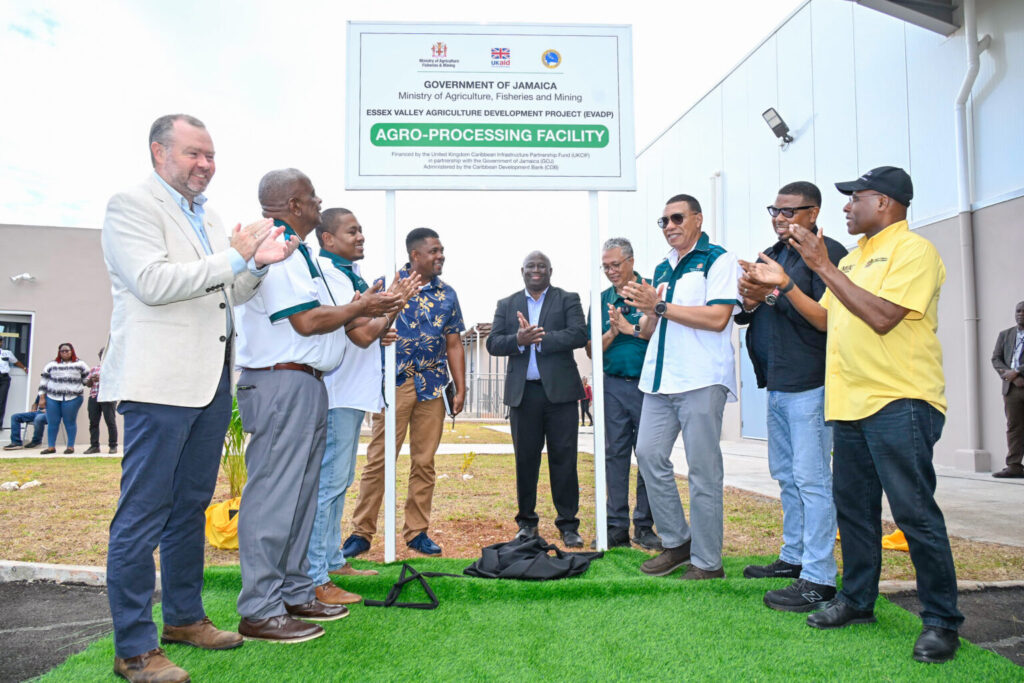
Keynote Address
by
Dr the Most Honourable Andrew Holness, ON, PC, MP,
Prime Minister of Jamaica
at the
Handing Over Ceremony Essex Valley Agro-Processing Facility and Administrative Building
On
February 4, 2026
———————————————————————————–
Thank you, CTD, that’s the Chief Technical Director of the Ministry of Agriculture, Mr Courtney Cole.
You will understand if I abbreviate the protocols and say it is good to be amongst family, all nice and decent people.
I will start by acknowledging the significant work and contribution of the United Kingdom Development Agency. It’s called UK Aid. It is important to start there because when I was a younger Member of Parliament and then leader of the opposition, former Prime Minister David Cameron visited Jamaica. The only person would be the then Minister of National Security, Peter Bunting; he would’ve been in Parliament then. And you recall what had happened during that momentous visit of former Prime Minister David Cameron, but what most Jamaicans would have forgotten is that when he visited, he made a significant announcement of a $300 million.
I heard you say $350 million, but this was a large announcement of a grant programme which was called United Kingdom Caribbean Investment Fund, and that would’ve assisted eight countries and one overseas territory for the United Kingdom in developing important sectors, and this fund was administered and implemented by the Caribbean Development Fund. So, in effect, the United Kingdom in looking at its international aid and in looking at its historic relations with this region, would have decided to make a special provision of funding. That was in 2015, a decade ago.
It took a little while for the fund to be stood up to become operational, but by 2017 projects would have been applied for and work would’ve started. This project, the Essex Valley Project was one of them. Now, bear in mind that the Essex Valley project did not start in 2017. Indeed, this was a project on the books for a very long time before, but it became possible because there was a window of funding so you will permit me to acknowledge the work and contribution and support of the United Kingdom International Development funding. And allow me also to acknowledge the support of the CDB in giving the technical and financial and project management support.
Now, as projects go in Jamaica, there are many projects because there’s just a lot of things to do in Jamaica, and we have a lot of bright people who can develop the projects, write the project proposals, but permit me if I use this celebratory event to commiserate that it took us that long from 2017 till now to bring a project like this which was conceptualized maybe three decades ago to fruition.
We’re here very happy that we’re going to have now the ability to stabilize prices by virtue of being able to control excess production by having the ability to store and repurpose through processing, to give greater certainty to farmers of making a return from their output, and greater certainty to consumers in the price that they face at the market, and an expansion in output by adding greater value to the initial production. We’re celebrating this now, but we could have had this 30 years ago, 20 years ago, and we could have had it earlier than now.
Almost every project that I officiate at and launch, I must make this point because it has become such an important part of the Jamaican landscape and the challenge that we face as a people. Now, just Friday, I was at another event, conceived a long time but probably started about the same time as this project started in 2019, and that is the Bustamante Hospital. It’s the facility that allows mothers to be able to stay overnight in support of their children who are being treated at the Bustamante Children’s Hospital. It’s a 32-bed facility. It’s an amazing facility as I toured it. Project was financed by the NHT so there is no financial issue, but yet we were only just a few days ago able to complete and open it. Why?
I’m going to be told, as we have been told here and has been mentioned, it was impacted by the pandemic. So yes, 2019, 2020; those two years in particular, difficult years. It shifted timelines, disrupted supply chain, and therefore had an impact on the ability for projects to be delivered on time.
Okay, so let’s take two years off the project time, force majeure, nothing we could do, but bear in mind that a similar project was done, financed in Belize from the same UK Infrastructure fund, which was to build a coastal highway. That was for £23 or £24 million. This entire project was for £53 million, but they completed theirs in 2023 and it started about the same time or probably a little after ours. The challenge that Jamaica faces is something called excessive bureaucracy, and it is almost in our nature to be excessively bureaucratic.
Permit me to exemplify this point. My dear CTD came up, and he read an extensive list of all who are here and did an extensive welcome and then invited the mayor to welcome everyone again. We are going to sit here for an hour and a half or more reading everyone’s name to make sure everybody who should be acknowledged is acknowledged, 30 minutes or an hour that could be spent doing something else more productive. We stand on ceremony and if we don’t get it done in ceremony, we have disrespected because that’s the nature of how we do things but that is inconsistent with the things we want to achieve.
So, Jamaica’s bureaucracy is a benefit for the country. Let me make that absolutely clear, because I know the chairman of the PAAC is going to say I’m against bureaucracy. For those who don’t know, the chairman of the PAAC is MP Bunting who is here as the MP for an adjoining constituency that will benefit from this.
Now, when we talk of bureaucracy, let it be clear bureaucracy by itself is not a bad thing. Bureaucracy means a system and a process that administers, governs and delivers outcomes. And in our system, we have ministries, departments, and agencies that forms effectively the public bureaucracy. Of course, there are other elements to the bureaucracy. We have oversight bodies, which are commissions and courts, and we have other public/ private entities in which form part of the decision-making process. We have a very good social partnership which helps in decision making so the bureaucracy could be stretched to be much wider than just government, but when I’m speaking of bureaucracy, I’m essentially speaking of the public bureaucracy, the ministry, the departments, and their agencies, and the commissions that exist.
Now, without that, the UK would not have felt comfortable to allocate $300 million in a fund and $53 million of that to Jamaica so our bureaucracy gives confidence to other countries who have bureaucracies as well. The bureaucracies talk to each other. There are standards of accounting, standards of approvals, and it makes it easier for that exchange to happen. Let me stick a pin there and say that Jamaica’s bureaucracy is solid, if not dense and it can compare to other bureaucracies all over the world, certainly in terms of the processes that are there, because for the last three decades, we as a country have gone through a process of layering on regulations and new processes and new standards and new requirements, layering it on so it’s thick, it’s dense, very sophisticated but it has become very complicated, and I will make another point regarding the complicated bureaucracy.
Much of what we have layered on would have come from the requirements of other countries. In other words, in order for us to interface with international agencies and departments of other partner countries, they say you need to have this in your legislation, you need to have that in your legislation, and we would have taken them on. All the parliamentarians would know that when we were doing the fiscal measures, sometimes it was literal cut and paste. Our job would be to debate them to say make sure they fit within our context, but by and large, we would have adopted, and so when we stand in the international arena dealing with other countries and other entities, and they are looking in on us, they can say, yes, I see where I can do business with you because you have in your legislation similar to what is in my legislation. We are strong like that, which leads me to say that the United Kingdom should have no hesitation in providing Jamaica with even more grants for the development of the country, particularly having been hit by Hurricane Melissa.
And in truth, I believe the United Kingdom based upon our historical ties should look more to supporting countries in the region like Jamaica, and we look forward to exploring that. And indeed, I will come to say more about how we intend to cooperate. The bureaucracy, as I said, is a good thing; planning and approvals, procurement and contracting, financial control and audit, environmental land and regulatory clearance, project execution and supervision, all those form part of what we call the bureaucracy. It is there to protect your interest, it is there to protect the public’s interest, and the public wants to know that every dollar that is spent is accounted for is spent for the purpose that it was allocated and the persons who received it genuinely should have gotten it, and it is to the benefit of the public good.
But the other challenge with bureaucracy is that it can become self-serving. When the bureaucracy fails to see the outcome and is more focused on the form than on the function, and this is what has happened to the Jamaican bureaucracy, it has become inwardly looking. Nobody wants to be called up before the PAAC. Nobody wants their name to be splashed all over the pages of a newspaper with allegations and unsubstantiated claims of being corrupt.
Sometime ago we made a change to our procurement and other legislation to deal with public bureaucracy, which criminalized certain offenses and it has had an impact on the speed at which the public bureaucracy works. Now, I stand here trying to maintain a balance because for decades we have fought against corruption as a country, but for decades we’re also dealing with the slow delivery of services and infrastructure. And the funny thing is when you go to the public at an election, nobody is going to give you any credit for what you do for transparency and accountability. The public is going to be voting on how many roads you delivered, how many hospitals you delivered, how many of these lovely facilities here at the Essex Valley project that is being delivered, but yet the two things must work together. You have to be able to maintain accountability and transparency and at the same time deliver quickly projects like these, because that’s the only way we are going to grow. It’s the only way the country is going to grow.
We have done fairly well in the last decade to the point that all the rating agencies and I quote the rating agencies not for any other reason, but that they offer the most objective perspective on how Jamaica is doing. There might be the view that they only look at the economics, and that is where the lack of understanding of how rating agencies work is visible. The rating agencies look at almost everything in the country and they determine how, for example, justice, education, infrastructure, security; what are the threats to the economic figures and from that they give you a rating, and all the rating agencies have either maintained Jamaica with a positive outlook or improved our outlook and that is because we’ve had strong social consensus around fiscal discipline.
Sometimes you hear in the public domain it would suggest that certain politicians would want to do away with fiscal discipline, but generally we come back to the fiscal discipline when we pass the budget of the country, but that fiscal discipline, though foundational to growth, by itself will not deliver growth. Fiscal discipline is a necessary condition for growth, but it is not sufficient. We are at the point where we will have to take on deeper, more strategic, more sensible institutional reforms that will take our complicated bureaucracy and turn it into a more efficient bureaucracy. These reforms are necessary. We must reform our public investment appraisal process. We must reform our procurement process. We must reform our contracting process. We must reform our licensing and regulation and permitting processes. All of these need to be reformed.
I will say this, you’re not going to have simple processes in any country today, but you can have complex processes that are not complicated. The problem with our bureaucracy is that it is complicated, meaning that things don’t happen in parallel simultaneously. They happen sequentially so you have to do one before you can move on to the other. They’re not outcome sensitive, so it doesn’t matter if there was a hurricane and people had to procure telecommunications and other critical things to make sure that we can get to people who are stranded, that is not a matter for the public bureaucracy. That is of no moment, no concern so we need the bureaucracy to be sensitive to outcomes and context. We must reform the bureaucracy.
The government may look like we’re doing well because almost every week for the last five years, I am handing over something, cutting a ribbon on something, announcing something. Believe me when I tell you we could be doing 10 times more. Floyd almost wasn’t Minister of Agriculture because yes, I did call him in, as I have done to several others in the Cabinet to say, listen, the pace has to increase because whatever benefit we were getting from the fiscal discipline, the dividends from good management of the finances of the country, people will soon forget about that. No new taxes don’t mean anything to anybody again. They have come to expect that. The next step now is how do we expand; how do we grow because the demands are not getting less.
So, aside from the institutional reforms, there must be a cultural reform in our country. There needs to be a culture change in our country. Number one, service must not be confused with servitude. We are largely a service-based economy, and the quality of service that is given is going to be a critical factor in how fast we grow so our attitude towards work needs to change. One of the biggest challenges we face right now is employers are coming to me to say, Prime Minister, you have to do something about the shortage of labour.
Now, there are two audiences hearing this statement. One audience is going to say, ‘but nuttn no go so, that’s not true’ and one audience is going to say, ‘thank God he recognizes that there is a shortage’, because there are two different Jamaicas operating. There’s one Jamaica who say, I’m not being paid enough and therefore don’t expect me to come work for that, and there’s another Jamaica who is saying there’s so much possibility that I can get things done, but I just can’t find any people. It is a problem in the society.
We have looked at the issue. We have done as best as we can to raise the minimum wage. We are the only government to have consistently raised the minimum wage, and we have made certain commitments towards increasing wage levels because we understand issues to do with cost of living and just people have a choice between work and leisure, classic economic trade off. And if people don’t get proper wage, they will choose leisure. We understand that so we’re trying our best to increase wages without increasing inflation, which eats out the wage that everybody else gets. We’re really, really trying to just gently move it up, but that is not going to be the solution to the problem. The solution to the problem is to increase productivity, and so this what you see here is a move on the path of the government to increase productivity.
I’m dealing with two things essentially. One, we have to increase the productivity of the public bureaucracy. And two, we have to increase the productivity of endeavours like these: business, capital investment, and labour together; that’s essentially what we have to do. In projects like these, this is all about improving productivity of our farmers, but more so creating market efficiency; that’s what we’re doing here today. I want you to understand this, and I went through all of this so that you appreciate the bigger thing that we are trying to do. Yes, we celebrate this. This is 1-in-20 that we need to build, and we should have built the 20 in the 10 years. So yes, I’m happy, but I’m also disappointed that we’re not moving as fast as we should, and I know we have the potential to do it. And I also know that if we were to exhibit the capacity to convert funding and capital faster, we would get more support from our development partners.
I delivered this speech not to you, this speech was effectively delivered to the chairman of the PAAC because the chairman of the PAAC is on record making this very speech about public bureaucracy and slowness and all of that, but when he steps into the PAAC, totally different argument. Every I must be dotted, and every T must be crossed, and no concern about outcomes or context or anything like that, but that just shows you it’s just how we are. It’s our democracy, and that’s what makes us great and it is what we will have to navigate in order to achieve the true destiny of greatness that God has bequeathed us as a people. Let us recognize that and let us fulfil that. Let us become more efficient and more productive and do more of these so we can truly lift our people out of poverty and into prosperity.
God bless you and thank you.