
Government Begins Black Tank Distribution Through Rural Water Household Resilience Programme
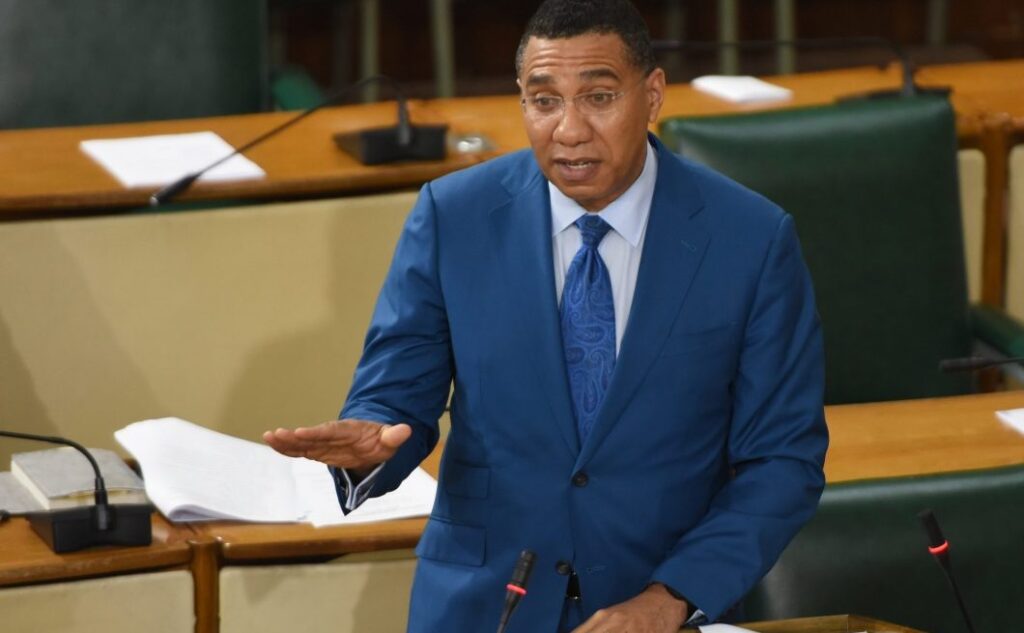
“This project is a direct investment in those households which are at the lower end of the economic ladder and are living with water insecurity. It is an investment in Rural Communities.”
——————————————————
– Prime Minister Holness
10 young people from several constituencies to trained by Heart NSTA Trust
230 tanks per constituency to be distributed under Pilot Programme
The Government continues to build resilience in water supply with the commencement of the Rural Water Household Resilience Programme. This is part of the Government’s commitment to distribute 50,000 water tanks across Jamaica to ensure that there is Water resilience at the household level.
This project will see the distribution and installation of three thousand, 400- gallon water tanks with supporting infrastructure for rainwater harvesting in the constituencies which were hardest hit by the drought in the first 6 months of this year.
Speaking in Parliament on Tuesday (October 31, 2023), Prime Minister Andrew Holness underscored, “This project is a direct investment in those households which are at the lower end of the economic ladder and are living with water insecurity. It is an investment in Rural Communities.”
The teams at Rural Water, and the social review committee will commence the roll out of the household rainwater harvesting systems and tanks next week, and once this Pilot is complete in December, the Government will move to expand the programme nationally to include all rural constituencies.
Importantly, the Prime Minister also noted, “These tanks will be distributed in areas which are either outside of the utility footprint of the NWC or in an area where infrastructure is significantly degraded and unable to provide predictable supply.”
The Constituencies which will participate in the Pilot program are predominantly in the Eastern part of the country. They include; East & West Rural St Andrew, East and West St Thomas, East and West Portland, South East St Mary, Central St Mary, Western St. Mary, the southern belt of St Ann including South East and South West St Ann, the hilly northern belt of Clarendon, including Northern, North Central, and North West Clarendon.
The Prime Minister stated, “The method of selection relied on data from the Met Services and was also scrutinized by the IDB in approving the use of grant funds for the purchase of these tanks.”
Members of Parliament in these Constituencies would have submitted 230 names each as recipients of these tanks.
Prime Minister Holness says each location that a tank is installed will be mapped and geotagged to ensure accountability, but also to ensure that proper assessment the true national storage capacity for water can take place.
In addition, the Prime Minister also noted that having locations geotagged will also make dispatching water easier in the event when trucking of water is necessary.
An important element of the project will include training of 10 young people by the Heart NSTA Trust from each constituency.
In the meantime, The Prime Minister noted, the Pilot for the project has benefitted from the International Development Bank (IDB) grant funding of $60 million JMD to purchase the tanks and the Ministry of Economic Growth and Job Creation, through the Rural Water Agency will provide funding of $250 million JMD to facilitate the coordination of the project, and the deployment of water harvesting systems and tanks.