
Official Opening of the Troy Bridge
Main Address
by
Dr the Honourable Andrew Holness ON, PC, MP
Prime Minister of Jamaica
at the
Official Opening of the Troy Bridge
on
June 5, 2026
—————————————————————————–
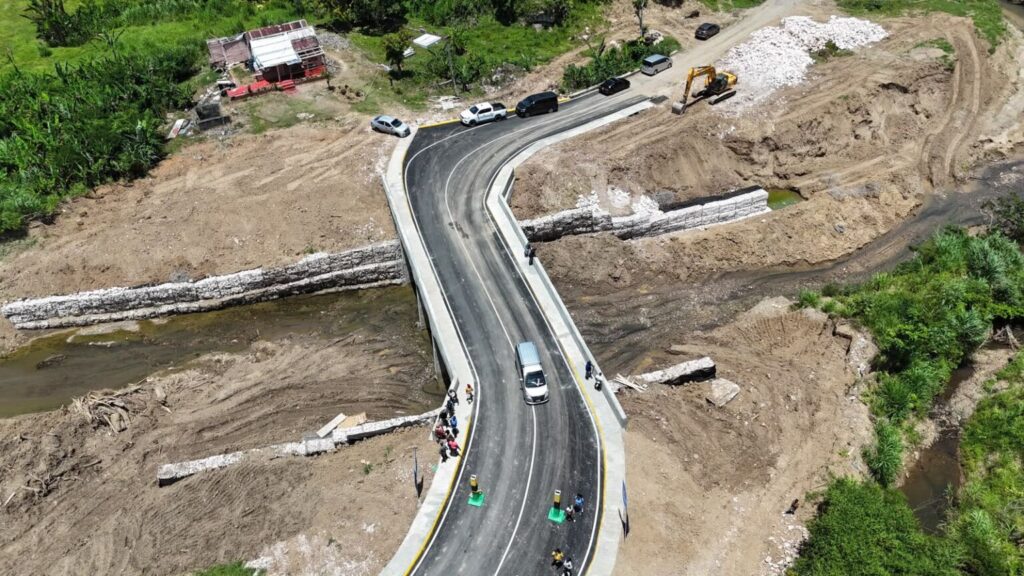
Today we gather to celebrate the opening of a bridge, but in truth, we are celebrating something much greater than a bridge. We are celebrating reconnection. We are celebrating resilience. We are celebrating the triumph of persistence over delay. For the people of this area, the Troy Bridge is not simply a physical structure, it is part of the history of this community, and part of the story of Jamaica itself.
The original bridge was built in 1869. Pause for a moment and consider what that means. It could mean that your great, great, great grandparent would have walked across that bridge when it was just built, or maybe even helped to build it. This bridge stood before the arrival of motor vehicles in Jamaica so this bridge was built to carry donkey cart but for 152 years, and in the last 60 of those 152 years, it would have carried some heavy-duty trucks. It stood before electricity reached here. It stood through generations of change, connecting families, farmers, merchants, churches, schools, communities right across the parishes of Manchester and Trelawny.
But I want you to consider that this bridge was constructed after a pivotal point in Jamaica’s history. A point which some of you may know about by virtue of the limited exposure you would have to this event in your school curriculum. I’m expecting that the children who are gathered here from Troy Primary and Troy High and forgive me if I don’t remember all the other schools that are here, The Morant Bay Rebellion.
How many people know of the Morant Bay Rebellion?
It is why we celebrate the national heroes, Paul Bogle and George William Gordon. We don’t know, many of us, what really happened there. We know there was a rebellion, over 300 Jamaicans were killed, estates were burned; it was a massive rebellion, but what it did was to spark a renewed interest on how Jamaica was governed by the British colonial power. After the rebellion, the then governor, Governor Eyre, was recalled, and indeed he was tried in the United Kingdom. A new governor was sent to Jamaica.
In fact, there was a Royal Commission to study why there was the rebellion, and the commission found many things. It’s not my time today to present on what the commission found, but what it did find was that Jamaica was not being properly administered; governance, infrastructure development. And they decided that the parliament at the time would be dissolved because there was a local parliament of local planters and wealthy people and after that parliament was dissolved, Jamaica became a Crown colony, meaning that it was administered directly from the United Kingdom. It didn’t have its local parliament to administer its affairs anymore because it was clear that there was a failure in the local governance of affairs in Jamaica.
And out of that came a massive thrust to reorganize and redevelop Jamaica. Somewhere around 1867 thereabout, they started to restructure Jamaica. Jamaica at that time had 22 parishes, they whittled down the parishes to 14 so that it could be properly administered. I know it in the minds of Jamaicans, it is inconceivable for some that we could have other parishes but during that period of time, for the better service of the people, the administrative and geographic arrangements were important. The new administration of Jamaica, which was coming centrally from the colonial powers in the UK, decided that they would cut from 22 to 14 but they also implemented a massive programme of public works.
Out of that Royal Commission, and the new governor, which was sparked as a result of the Morant Bay rebellion, we had the formation of the Jamaica Constabulary Force. We had a new judicial system put in place and we had the Public Works Department formed, and out of that came massive public works, including the Rio Cobre Canal, which irrigated some 25,000 acres of land, the building of many of the roads that still exist today and bridges including the Troy Bridge, which was started in somewhere about 1868 and completed in 1869.
I want you to settle on that point because fast forward to today, it took us almost five years to build a replacement bridge. The bridge that was first built wasn’t built to carry lorries and heavy-duty trucks and the high volume of traffic, but it lasted for 152 years. It would have seen Hurricane Charley, Hurricane Ivan, all the hurricanes. It was built by virtue of a national thrust directed by the colonial government, and we independent people struggle internally to deliver infrastructure quickly. This speech is not just for you; it is for all Jamaica listening.
This bridge, it is not only for the benefit of Troy and the communities around, this bridge is a lesson to Jamaica. Like much of our infrastructure, people scarcely noticed it when it was working but when Tropical Storm Grace destroyed the bridge in 2021, everyone suddenly understood its value. The closure of this crossing did not simply create great inconvenience, it disrupted lives. Students had to travel long distances to school, farmers incurred higher transportation costs to move their produce to market. And by the way, the idea behind this bridge was to open up what was called the Yam Belt in Trelawny to move the yams through this bridge, through Manchester to carry you into Kingston to get connected to the ports so the infrastructure supported an economic plan.
It is quite unfortunate that somehow successive governments, have not seemed to have the ability to effect infrastructure plans that support economic plans and social development. Think about it. This is an infrastructure, before it was destroyed and replaced, that we relied on for 152 years. The destruction of this bridge reminded us of a simple truth: infrastructure is not merely concrete and steel. Infrastructure is opportunity made real, opportunity materialized, opportunity accessible. Infrastructure is productivity made possible.
Throughout history, the great civilizations of the world understood this principle. The Romans built roads and bridges not as monuments, but as instruments of commerce, administration, and national cohesion. Across every successful nation, transportation networks have reduced distance, expanded opportunity, and created prosperity. Jamaica’s development must follow that same path. The roads, bridges, railways, ports that were built during the 19th and 20th century connected our people to markets, connected communities to each other, and connected the nation to economic opportunity.
The Troy Bridge belongs to that proud tradition, but at this point, the nation should consider that much of our infrastructure that we have today was generated from that era of infrastructure rapid growth planning. That infrastructure is now aged. It has outlived its useful and engineered life. It is very difficult to communicate that thought to the average person coming on the road to get here, which is pothole-filled and bumpy, difficult to manoeuvre, and in sections collapsing. All you want to hear is how are we going to replace that road and why is the road bad without necessarily appreciating the context behind this.
As a member of Parliament, I not just sympathize, I empathize, I understand because there are sometimes when I wish I could complain to somebody too. It is a matter of passing it on to the Prime Minister when the pressure from the citizens reaches you to say, “I’ve brought it to a higher authority to get these roads repaired.” But I want you to bear in mind that we are not going to be able to repair overnight the 20,000 kilometres of roadways that we have, much of which was built over 100 years ago.
The road is not only bad because the contractor didn’t fix it properly, which is oftentimes a reality that we face and cannot be excused. The road isn’t only bad because water intrusion or other weather events. The road is bad because it is old and it was not properly maintained, but even roads that are properly maintained, there is just a time where no matter how much you maintain it, the road has to be totally redone; which is why we have the SPARK Programme.
A lot of people said to us when we were doing the SPARK Programme, “Why not just take the money and patch the road?” That was said even by some of our own MPs because they don’t understand the problem. Every year, Minister Morgan will tell you, he comes to me pleading for more money to do patching and every year we are patching. Sometimes we are patching the patch that we patched. And yes, we have to patch it because of the convenience that you need but you also have to understand that we have to be thinking, how do we now start to replace these aged infrastructure; these old roads that we have, how do we rebuild them and that’s what the SPARK Programme is designed to do. We are literally not just patching and resurfacing, we are rehabilitating.
So, the course is there- thank God we’re not going to have to create new alignments, but we’re going to have to take off the top surface. We’re going to sometime have to go to subsurface. We’re going to have to put in new drains. And as we take off the top surface and the subsurface, sometimes the pipes that are underneath, they are old, we have to change them; that is all about rehabilitation. The SPARK Programme is designed to address this business of aged infrastructure, old infrastructure, to bring them to the modern standards that will give us several generations of roadways that will last.
Today, we are happy for this bridge and it’s not just the restoration of connection, it’s the restoration of dignity. When I saw the first news clips of the kids trying to cross it, some with rope, some wading in the water, I just felt very, very sad about the whole situation, and said, “This is not what Jamaica is about.” And today we are restoring the dignity of the people around the area who rely on the bridge.
It also restores the confidence of the people because sometimes, as I could have picked it up from the very rousing applause when, I don’t remember who said it, “You must not forget the rural communities.” I think it’s Mikael who said it and endorsed by Minister Morgan claiming his rural heritage, because there are oftentimes rural communities feel forgotten. It’s a loss of dignity, a loss of respect, a loss of confidence and let me assure you, your government does not forget the rural communities. What the government is trying hard to do is to rapidly integrate the rural communities into the nerve centres of economic activities and that means ensuring that you have proper roads to be able to connect, so you can move from here to Kingston, here to Falmouth, here to Montego Bay very quickly. You can choose to live here and choose to work elsewhere. You can move your goods from here to the markets where they will be sold quickly, that’s the idea.
We’re not forgetting rural communities, and the $230 odd million spent here is a symbol that you are top of mind and not forgotten, but many Jamaicans have asked a legitimate question over the years. If everyone agreed that the bridge was needed, why did it take so long? It puzzles me too as your prime minister because the then speaker of the house, who was the member of parliament for one side of the bridge took an unusual privilege in parliament as speaker to raise the concern, and I was about to write her a note to say that this was not usual protocol for speakers to use their chair to raise their constituency matters, but before I could pen the note, the member of parliament for the other side, Mikael Phillips, stood up and raised the issue as well so there was a bipartisan agreement that the Troy Bridge must be fixed.
But there is such a thing as procedure. I have been using the term bureaucracy. The question deserves an honest answer, right? And the answer lies in the systems governments use to ensure that public funds are spent responsibly. Over many decades, countries around the world learnt difficult lessons about poorly planned projects. Bridges were built without proper designs, roads were approved without adequate engineering studies, costs were underestimated, budgets were exceeded, projects were started sometimes even without financing, and taxpayers ultimately paid the price.
To prevent those mistakes, government developed systems of public investment appraisal. These systems require detailed engineering assessments, environmental reviews, economic analyses, procurement plans, fiscal evaluations, and independent approvals. These are not meaningless exercises. They serve an important purpose. They help to ensure that taxpayers receive value for money. They reduce waste. They discourage corruption. They strengthen accountability. They support sound fiscal management. And so as Prime Minister, I would never advocate abandoning these principles. Indeed, Jamaica’s hard-won fiscal stability has been built upon stronger discipline, better planning, and more responsible management of public resources.
But there is another truth we must acknowledge. Every system can become excessively rigid. Every safeguard can become overly burdensome. Every procedure can eventually create its own cost, and those costs are often invisible. When a bridge remains closed for years, there is a cost. When a farmer must travel farther to market, there is a cost. When a student spends additional hours commuting, there is a cost. When a business incurs higher transportation expenses, it costs you. When an ambulance or emergency vehicle faces delay, there could be a cost; it could be your life.
These costs do not always appear on the government’s balance sheet. They are not always visible to the technocrat or bureaucrat who is implementing the procedure. Yet these costs are borne by you every day. It is borne by the children trying to get to school, risking their lives, going down the slope, crossing the river. My challenge is that it is invisible to the people who are saying to the NWA, for example, “Go and do an environmental study, go and do an economic assessment of the bridge.” Everybody agrees the bridge is necessary, but the procedure requires an environmental assessment of the bridge that was here 152 years before anybody think of environmental assessment. The bridge was built to create the economy that is here, built long before, justified its existence. No need to say whether or not this bridge will create economic activity but yet, this project had to go through all of the procedures.
I can’t complain because ultimately it is the government that makes the law, and I want everybody to appreciate that the government can change the law as well. The requirements that is imposed upon the infrastructure projects sometimes cost more than the actual infrastructure construction. It doesn’t make sense. The time it takes to do study on top of study on top of study sometimes take longer than the actual construction work itself. And I tell you, there is a thinking in our country, don’t trust yourself, so double-check everything three, four times over before you do it. And two, if it never takes long, it wasn’t well done. It’s a culture that has embedded itself in our public bureaucracy. It has gone to the point where it appears as Jamaicans, we are afraid of success. We have allowed a certain school of thought to paralyze us.
When the colonial government decided after 1865 that they were going to build this bridge, they said build the bridge and with that, the bridge, the road, the irrigation, all of it was done. We as independent people, we can’t figure out how to build the bridge and still be accountable and transparent at the same time. Our bureaucracy must change.
Sometimes it is less effective at measuring the cost of not building quickly enough. I want you to understand that point. The system we have is quite effective at measuring the cost of building, but it is not effective at measuring the cost of not building quickly enough. It would have cost us at least 30% less if we had built this bridge four years ago. I want you to think on that. This is where reform becomes necessary.
The purpose of a process is to produce a result. Unfortunately, many of our bureaucrats and technocrats and some of our politicians and many in the civil society who criticize the work of government believe that the end of a process is another process and it has no regard for the suffering that you feel. The people who critique the government trying to move fast will never come here and hear your complaints. In fact, have you ever seen any one of them?
When the process itself becomes an obstacle to results, then responsible leaders have an obligation to improve the process. The objective is not to choose between accountability and efficiency. The objective is to achieve both, that is where this government is pushing towards; achieving both accountability and efficiency. The objective is not to weaken safeguards. The objective is to make our safeguards smarter. It would have been a much smarter application of the Public Investment Appraisal System if it was understood. A bridge was there before. The bridge was being used. The bridge supported an economy. No need to go back and do another test, another consultant. That is a smarter way of applying the rules, but when bureaucracies become self-serving, the objective is not to remove scrutiny. The objective is to ensure that scrutiny does not become paralysis.
This bridge teaches us that good governance must mean more than following procedures. Good governance must also mean delivering outcomes. A modern state must be capable of asking the necessary questions without endlessly delaying the necessary answer and this requires us to have a more mature national conversation. But when reforms are proposed to accelerate approvals, some of the same voices object. They demand urgency but resist change. They criticize delay but defend complexity. They speak passionately about process but rarely acknowledge the hardship experienced by the people waiting for benefits. The people of Troy did not need an endless debate. They just simply needed a bridge.
Empathy requires us to reconsider not only the risk of action, but the cost of inaction, and that is why this government is committed to reforming Jamaica’s bureaucracy. We are determined to modernize our public investment and approval system. We are determined to reduce duplication. We are determined to shorten approval timelines. We are determined to create accelerated pathways for critical infrastructure projects where delay imposes significant hardships on citizens because efficiency is not the enemy of accountability. That is why, ladies and gentlemen, we have created the National Reconstruction and Resilience Authority, (NaRRA).
NaRRA will seek to structure projects, order them, cut unnecessary bureaucratic red tape, but at the same time gives a high level of accountability, transparency, and ensures the integrity of the processes. NaRRA will not only help us to recover from the hurricane and build resilience, but more importantly, NaRRA will show us that there is a better way to build Jamaica, there is a faster, more efficient way to bring infrastructure development to the people of the country.
This bridge stands as a symbol of resilience, but it also stands as a challenge to us as Jamaicans. You have been fed a diet by our intellectuals, our so-called thinking class, that you can’t trust your government, that everything that is being done, there is something hidden behind it. You have been fed a diet which says your government is incapable. As independent people, we need to shake that off, and we need to support the effectiveness of government. We must support governments that deliver for the people and this government has demonstrated. Not a perfect government, yes, there are problems, but you can rest assured that this government wants to deliver for you quickly and effectively.
I am certain that this bridge will last another 150 years or more, but for me, this is a turning point. We’re not going to allow critical infrastructure to be tied up in procedures and processes that satisfy procedures and processes and don’t deliver. Let Troy be a lesson to Jamaica. This bridge now stands as a symbol of renewal, a symbol of the importance of infrastructure in national development, and perhaps most importantly, a symbol of our determination to build a Jamaica where government works not only carefully, but effectively, not only responsibly, but urgently, not only according to process, but in service of the people.
Today, we reconnect communities. Today, we recommit ourselves to building Jamaica that delivers for every citizen. May God bless the people of Troy. May God bless the people of Trelawny and Manchester. May God continue to bless Jamaica land we love.