
Official Reopening of Business Kiosks/ Shops, Border in St. Elizabeth
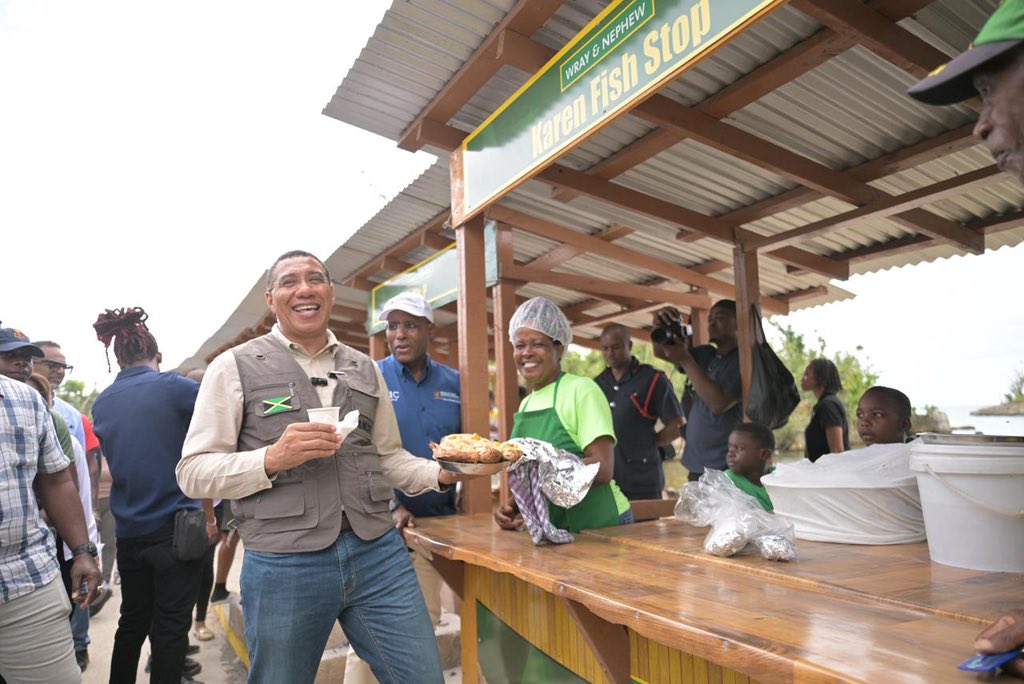
Keynote Address
by
Dr the Most Honourable Andrew Holness, ON, PC, MP,
Prime Minister of Jamaica
at the
Official Reopening of Business Kiosks/ Shops, Border, St Elizabeth
on
January 16, 2026
———————————————————–
Today’s reopening of the business kiosks and shops at Border in St Elizabeth carries significance far beyond the physical restoration of a market space. It represents a defining statement of national intent that after a disaster such as Hurricane Melissa, Jamaica is intentional and serious about rebuilding communities, restoring livelihoods, and renewing the foundations of economic life with greater resilience and purpose. And we are doing it in an area that is a microcosm of the wider commercial endeavours in Jamaica, that is with the MSMEs because this segment of Jamaica’s economy represents almost 70% of the economy. It is significant. It is a large employer of labour. It carries income for most households in Jamaica and therefore having the launch of our programme for the restoration of businesses in the country, having it done here, it’s very symbolic of the government’s intent and the government’s respect, concern and appreciation for small businesses/ micro businesses in Jamaica.
If you listen to my presentations, you will hear me emphasize the importance of the economy, and I’ve oftentimes tried to break down the economy in its simplest form to make it accessible and relatable because there is a sense in many Jamaicans, including many of the lovely ladies here gathered well-decked out in their branded aprons, that they may sometimes feel they are not a part of the economy.
In other words, there is a certain sense of non-inclusion in the wealth of the nation and that is historical that the average Jamaican does not see themselves as owners of the economy or as having rights to economic benefits, and we must change that. We have to change that mindset, and we want every Jamaican to feel that they are an important part of the economy, that they can articulate and navigate and get opportunities and do well and be successful in the economy no matter how small their participation in the economy is. That within this nebulous and ephemeral and this very distant thing that we call the economy may appear to be, I can find my way in the Jamaican economy and that is what we are doing as a government.
Yes, a few days ago I was opening a manufacturing enterprise, a USD$70 million investment in a brewery but I make sure that today I am here to see the restoration of commercial activities in one of Jamaica’s premier, what we call street gastronomy attraction. Do you like the word? It is the same thing as street food, but when you put on the branding and you nice it up- by the way, street food is a huge tourism attraction globally and what we are doing is investing in that. I see Carey Wallace here from the TEF representing the tourism interest because make no mistake about it, this is part of tourism.
And by the way, visitors don’t only come from overseas. Because of this, there are many persons who are going to say let me drive from Kingston and come to Bother, and because the ministry has made an investment in putting in not just the kiosks, but also a place that you can park. I gather there are some ablution bathroom facilities as they call them and other facilities for people to stop and enjoy; that you may get more customers coming, more dryland tourists coming to participate and that’s more business, that’s the economy.
As of today, you are a part of the economy. You’re an important agent of the economy, and I want to see yourselves as that and what is happening here is investment, and you are investors and businesspeople; that’s the mindset that I want you to have. And once you start to have that mindset, then you start to think about how you’re going to grow, how you’re going to innovate, or you’re going to bring on new products, new services, greater conveniences and before you know it, as many have been doing, you build your house out of it, not to mention the cars, but I know there are many stories of persons here sending their children to school out of fry fish and bammy. Nothing is wrong with that and so we are investing in that in the small businesses.
Right after the pandemic, when everybody was tied up in trying to figure out how we would conduct the relief exercise, we had already worked that out and we were already focused on recovery and how we would stand up businesses. Now, whenever you’re in a disaster, there’s a certain mindset that comes in and if you’re not careful in managing the disaster, you get locked into a mindset, and the mindset is you want to deal with the thing that you see in front of you, the immediate need; that’s important. And sometimes the population is not yet ready to receive information about other things that don’t appear to be immediate, but governments have to be thinking three or four steps ahead, that’s why you elect them.
I gave a directive to Minister Hill, and I can’t take tales out of Cabinet, but he interpreted it as it was, a directive, get it done, and he did. I had to call him a few times and remind him that his ministry is in Kingston, but what we wanted to do was to return to normalcy very quickly. So, yes, we want to be giving out food packages, but that’s not normal. Normalcy is when the local community shops, places like Border, the little plazas, when they return to normal, meaning they can start to sell goods, you can get gas, you can go and buy ice if you don’t have electricity; you want to get those business clusters up and running and that’s where we were four or five days after the hurricane.
We spoke very early about a generator programme, and again, as I said, government have to be two or three steps ahead of what everybody else is thinking. So yes, there were generators donated in shipments from our partners, but we got maybe about 600 generators. I don’t have the exact figure here with me, but the need for generators would be possibly about 150,000 households, not to mention businesses. I don’t know how you would share up that amongst all the needs. None of the generators that were donated were given to any commercial entity, not one.
We took a policy decision that all generators will be given to build resilience in the state, so they were given to state entities. They were given to the police who were incredible first responders. They were given to the JDF. Again, incredible first responders. They were given to hospitals. They were given to parish council offices, and of course they all have to account for them, but after Hurricane Melissa, we can now say that there are many state entities which didn’t have backup power before that now they have backup power, but they have to do one other thing. They have to now show how they’re going to maintain it and put in their budget, how it will be replaced when they will inevitably lose their functionality. What we have done is to use those generators to give us a kickstart for resilience building for business continuity, meaning the functioning of government business after a disaster.
What we did, however, is to make an allocation from the budget through the Ministry of Industry, Investment and Commerce to purchase generators and those generators were made available to small businesses up on assessment. Meaning, if you didn’t need it, then we didn’t give it. And so I don’t remember the figure as to how many you have given out, but what I know is that some persons have put up their hands and said, listen, I no longer need it, come take it because of the arrangement that was put in place when the generators were given. When businesses would’ve received electricity, those generators now go back into the pool to come to other areas which are not yet restored in electricity, and that’s just efficient. That’s the best use of taxpayers’ resources but there are some people who believe that in a disaster, anything goes and we shouldn’t apply thought to what we are doing.
As I reflect upon that period of the response, and as all of you would have been following some of the discourse around this very small element of the response, I hope you realize that good government matters, that you could have government that would’ve taken other decisions that would’ve led to a waste of your resources. Good government matters. And so, I’m standing here today to report, as the minister of industry investment and commerce has reported, that we have worked closely with the distributive trade and they have contributed largely to the restoration of business. Companies such as Wisynco, Cari-Med, Jamaica Broilers, Lasco, partnered with the Ministry of Investment, Industry, and Commerce to support the restoration of the distributive trade right across Jamaica.
In total 1,377 businesses across five parishes were formally assessed between November 10 and December 31st. St Elizabeth alone accounted for 160 assessments, and every one of these businesses that were assessed represents people, it represents a household, it represents livelihood, and so against this backdrop, we have the Business Restoration Initiative and what you are seeing here today is the conclusion of just one of the interventions in the business restoration programme.
By the way, this is going on right across Jamaica, but this is a cluster. I have given a directive to the Cabinet Secretary to reduce the number of ceremonies and the extent of ceremonies that we have because it does take up a lot of time and it really consumes the effort of the public bureaucracy and staff to be sitting in ceremony for one or two hours but increasingly, it is becoming important that we have to have these events. We have to have these markers in time for achievement because if you don’t, the deluge of misinformation and falsehood would overwhelm the public’s attention and distort the national mood. The truth is that our population is consuming quite a bit of false information and many in our population are not empowered in a way where the media literacy skills are high, that they can discern what is nonsense and what are facts. And so, the government has to take this kind of forward-facing frontal position to bring information. We almost have to be in your face every day to counteract the deliberate falsehoods that are being spread.
I have university educated people WhatsApping the things that they see on TikTok and social media and asking me if this is true. And I’m saying, you went to university, you’re supposed to be able to know if this is true or not, go and Google it yourself. But it tells you, the dumbing down of the society that is taking place because of the deluge of falsehoods, and it’s not just Jamaica. When I speak to my CARICOM colleagues, they have the same thing. When I speak to my colleagues and friends in other countries in leadership positions including prime minister and presidential positions, they lament the same thing, that their population is being assaulted by a deluge of falsehoods that changes the public mood and makes it absolutely difficult to govern; a game which does not benefit the country. It may change government, but all it does is make it more difficult for each government to govern.
So, the people who are paying for this to be done, because largely a bunch of this is done through what they call bots, organized, believe that it is good to do it but when you look at it from the grand scale, it is very destructive to the harmony of the society, and it is something that has to be addressed but we address it by creating a deluge of factual information, deluge of information about what the government is doing.
So again, I want to thank you for coming out to this ceremony, marking the signifying and exemplifying and showing the business restoration programme, but at the same time, celebrating with the good people of Border that they have restored resilient infrastructure, they’re a part of our economy, we respect, love, and appreciate them. We will continue to invest in them and as a sign of that, I am placing my order with Monica and whoever else that may want to serve me. I need a dozen; I love fry fish and a lot of bammy with that.
God bless you and thank you.