
Special Press Briefing on Preparedness for Tropical Storm Melissa
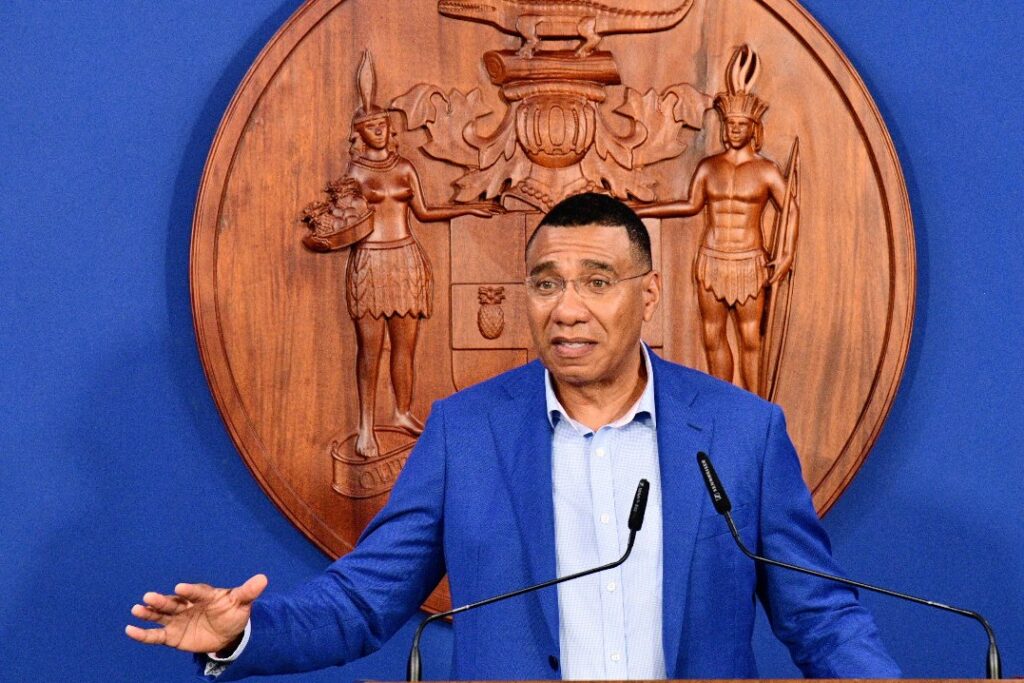
Address
By
Dr the Honourable Andrew Holness ON, PC, MP
Prime Minister of Jamaica
At the
Special Press Briefing: Preparedness for Tropical Storm Melissa
On
October 24, 2025
_____________________________________________________________
Thank you, Minister. Thank you, everyone, for joining us.
Someone sent me a message which I thought was interesting enough to share, and the message read, Prime Minister, we haven’t seen you in all that have been said. Well, let me say it in this way, there is a government that is made up of ministers, heads of entities, permanent secretaries, various public officers and administrators, and they all must do their jobs. And my job at times is to ensure that they are all well-coordinated and that they’re all doing what they’re supposed to be doing.
Sometimes you are leading from the front and sometimes you are quarterbacking, as the Americans would say, but there is never an absence of leadership, and I’m certain that you would’ve seen on display the ministers taking responsibility for their various portfolios as it relates to preparedness for the approaching weather event. This is a good segue because during this administration, you would’ve seen the country at risk at several weather events and other kinds of threats, including a pandemic, and we have generally handled them all very well. I believe that our administration has managed crises very well and has ensured that we not only withstand the threats and the crises, but we recover and recover quickly and stronger than before.
The weather events are becoming more frequent, but the frequency is also paralleled with greater intensity. We’re seeing more weather events, which are more intense in nature, but we’re also seeing these kinds of events overlapping, so you’re seeing more weather events that are of increasing intensity, but before one is finished, another one is coming, so they are overlapping. The administration has to have a standing policy and strategy to deal with crises that are more frequent, more intense and overlapping, and that is why we have taken a very systematic approach to dealing with these issues. There is an existing legislative framework which guides how we respond to crises that we term disasters, and that is the Disaster Risk Management Act, and that is the framework within which we will operate. Certainly, there are constitutional provisions under emergency powers, but it is at this time not our intention to utilise those powers. We would’ve heard from ODPEM in our briefing session before this, and ODPEM will give us an assessment shortly as to whether or not the government should declare a disaster or a threat of a disaster. I think you know what will happen that given the update from the Met Office that Jamaica is at risk, there is a threat of the weather event affecting us in a significant way.
The latest report suggests that the eye of the hurricane would be the weather system. It’s not yet a hurricane. The system is about 220 miles southeast of Kingston, Jamaica. It is still moving very slowly, and that has posed a difficulty for us in planning because you don’t want to put your preemptive measures too early; people get frustrated and say it’s not going to come, and then they go back to normal activity, and then it comes so we have been trying to calculate when to put in the preemptive measures. You would’ve seen that we took an early preemptive measure yesterday by suspending schools, and today, I believe it is at 2:00 PM that the public sector will be asked to go home. I suspect the private sector will follow suit. So we’re really trying to gauge, and there is a reason why we have to be very careful in gauging. Beryl, when it hit Jamaica, cost us about $57 billion of our 2023 GDP, and it probably cost us about 0.5% in terms of a reduction in our GDP growth, so it will have an impact. We don’t want to exacerbate the impact by taking actions that will reduce commerce, reduce business too early, so it’s a real guessing game, and it requires us meeting, analyzing, getting all the data so that we make the right decisions. I know that there might be some frustration in the public, but bear with us because we can’t make any mistakes with the measures that we put in place.
Under the Disaster Risk Management Act, when the orders are proclaimed, which we expect that we will do a declaration possibly the end of today or sometime early tomorrow. The Act will give certain powers that the administration and the various entities that are vested with these powers will use for the protection of life and property, and we ask the public to cooperate. And you can be assured that before any of these measures are taken, there will be consultation with the stakeholders, and there will be adequate public notice so that everyone will know. We do ask for your cooperation.
We will take one other measure, which is under the Trade Act, to prevent any price gouging that might take place. The Minister of Health guided you properly to say, stick with healthy foods that won’t perish as a result of lack of refrigeration, and he did mention sardines and water crackers, but I saw a picture recently of shelves in our supermarket and all the bread is gone. People are taking precautions, stocking up on food, but it leads to a very important point that as these products become scarce, there may be persons tempted to raise their prices, and we will not have that during a disaster, and therefore, the Minister of Industry, Investment and Commerce will shortly sign an order to this effect to prevent price gouging.
Now, you would’ve heard extensive reports from Minister Vaz, the JPS, and from Minister Samuda and the NWC, and from the utility companies that they are projecting that, as a result of the experience of Beryl, they will be in a better position. Evidence of that is that I am told that 31 line workers/ linemen are already in Jamaica, and others are being flown in as we speak, so the intention is to be ahead of the recovery effort should we be impacted in any significant way from this.
I am told as well that the necessary precautions have been taken to ensure that telecommunications remain functional. Minister Samuda has advised that we will be able to have an uptime of about 80% within 72 hours of the hurricane for most customers, and that they have taken measures to control turbidity by closing off some of the intakes into their major water storage. This, they are able to do because already those storage areas are full, so they can control and manage that. We are expecting that if the event is a Beryl scale event, then we should be able to keep these services throughout as long as possible throughout the weather event, if it does impact Jamaica.
I’ll make another statement here, which is of importance. During hurricane Beryl, the loss of telecommunications was not so much because of the impact of the hurricane itself, but there was significant theft of fuel and equipment relating to telecommunications. We have indicated that we intend to amend the law to have stiffer penalties and to criminalise some of these acts because they do impact the entire economy and should be treated with more severely.
In lieu of the amendments to the law, the security forces have been alerted that special attention ought to be paid to these critical infrastructure, which are necessary for the continuity of government and for the continuity of business and indeed for public safety. Commissioner of Police, you have been tasked specifically to ensure that there is no break in our telecommunications, and to ensure that these criminals who would want to take advantage of the disaster to exploit our telecommunications infrastructure, that they are dealt with in the harshest way.
The JPS has informed that they have already taken steps to clear vegetation from their lines, and that is indeed good news. They had already started work on restoring their lines and strengthening the infrastructure, so I’m expecting that we would not have a fallout as we did during Hurricane Beryl.
I’m told that PetroJam has made the necessary provisions and has taken the necessary steps to ensure that we would have over two weeks of refined products, fuels, and other products that we would need and LPG as well, so during and after the disaster, even if no ships were to come in, we would have at least two weeks of supplies
During Hurricane Beryl, the greatest impact would’ve been on residential roofs and flooding in areas that are flood-prone; houses would have been destroyed by flooding. It’s very difficult to gauge whether or not this weather event will parallel Beryl in terms of its impact. This weather system seems to be very unusual in that it is essentially sitting there southeast of Jamaica, creeping at two miles per hour, and it would have been doing some strange things, but what we have heard is that the wind force has increased from, I believe, 45 miles per hour to now 60 miles per hour, so it is strengthening.
Whatever happens, the projection is that it will come closer to Jamaica, and we would be affected one way or the other by either rain and wind, or just rain. So whatever happens, we can safely say there will be an impact, something will happen. The likely impact would be the rain event, and that would mean flooding and landslides. It would also mean that there could be some marooning of communities, some communities could be cut off, and it would definitely mean a scouring of our already aged and struggling road infrastructure and possibly some impact on our bridges.
It means, therefore, that households should take precautions in ensuring that whatever work they can do to their roofing to prevent leaks, they should do so. When we flew over the affected areas for Hurricane Beryl, and we saw the roof damage, and then when we landed and saw the damage up front, what was clear is that the roofs that were damaged did not use the building code requirements in their construction. It is not too late to make adjustments and modifications to ensure that your roof is protected.
The government will launch a very comprehensive humanitarian and recovery strategy after the event, but for that to work effectively, the beneficiaries, the people who would require support and assistance, must have identification. There is a view that because it is a disaster, all the rules are suspended. I hasten to advise everyone, in particular the permanent secretaries, the heads of departments, and the accounting officers and the ministers; there is no suspension of accountability rules even in a disaster. And every dollar that is spent has to be accounted for. The same people who are screaming that we need it now, we need it now, are the same people who will turn around and say, where did you spend that money so there is no break in accountability, and we ask the cooperation of our citizens in providing proper identification so we can track where the benefits go, who received the benefits and for what reason.
This is also important when it comes to, not just accounting to ourselves, which we must, but it is highly likely that we will get international donor funding and philanthropic support, and they too require that the resources that are given philanthropically are accounted for so there would be an accounting process. In practical terms, because this is going to be a weather event that is likely to be a heavy rain event, you should protect your important documents. Put them in a Ziploc bag, tie them up in a plastic bag, keep them somewhere safe because we’re going to need to be able to identify you in order to facilitate a very quick recovery process.
If you live on gully banks, if you live in river courses, if you live in areas that were flooded during Beryl, expect that this will happen again, that there will be flooding. Take the necessary measures. I have not yet said evacuate, but if we declare a disaster, evacuation orders will be in effect, and that will be, as I said, within another few hours, we should be able to declare that but I’m putting everyone on notice. If you look on the map there, you will see that we have already scoped out the areas that are at risk. We will publish those, and we will call up the names of the communities to say, be prepared, be alert
In terms of transportation for evacuation, the Ministry of Transport is already prepared. The JUTC buses are already alerted to the need for evacuation, so we will provide some amount of public transportation. If it becomes necessary, the toll roads will be open to allow persons to move more quickly and safely, so we are prepared in that regard as well and we encourage persons, if you are called upon to be evacuated, take the opportunity and leave the area.
I want to say a bit about information. You can’t give too much information during a disaster. And this would be now our third press conference on the matter, and we keep information analyzing the public and that is for a reason because there could be persons with nefarious intent or just mischievous intent or just for fun, could provide information that is misleading which could lead to disastrous consequences so we have to be out there putting information in front of you all the time. And I would encourage all Jamaicans to pay attention to the official information sources, the Met Office, the Office of the Prime Minister, my pages, JIS and, of course, the Ministry of Education and Information; all our official pages, and you can rest assured that all the pages are centrally coordinated. And just to say a word on the central coordination, ODPEM is the entity that is charged with the central coordination of Jamaica’s disaster preparation and response and they play a significant role actually in recovery, but certainly at this phase of the disaster and during the humanitarian and relief effort and in the recovery effort.
In terms of roadways and other infrastructure, Minister Morgan would’ve said that we have already allocated $400 million. Again, we have to be cautious when do we make the allocation, when do we commit the public expenditure. I think we have a good measure right now, and we have done a good balance in giving all constituencies a minimum threshold of about $3 million and that is to be used for drain cleaning or other civil works that is necessary to prevent flooding and landslides if possible.
As the storm comes closer and we are able to project the areas that are going to be specifically impacted, then we will consider making other allocations. Now, I want here to say that the government does not have an unlimited source of revenues to respond to this event, but in the last 10 years Jamaica can say that it has achieved a certain level of fiscal resilience, meaning we are able to respond to disasters, particularly without necessarily borrowing, and that is because we have put contingencies in the budget, and two, we have a disaster fund that is funded and we have parametric insurance that is in effect, and we have catastrophe bonds that are in effect, and we have certain borrowing arrangements conditional on a disaster.
We have lined up quite systematically the financing for dealing with and responding effectively to a natural disaster and that is a feature of this administration. It didn’t really exist in this significant way before now and we intend that this will continue, which is why I started at the point that it is important that we manage the disaster such that it is not of a greater impact on our economy because of any lack of management of the disaster and that is what your administration is doing.
Yes, it will have an impact, but we’re going to use management to minimise the impact so that we can continue to grow. It will have an impact on our growth, but if it’s not managed well, the impact will be even greater. The response, the citizens of the country should know, it’s not just about how we get food to people who don’t have it during the disaster, and how do we get water to people who don’t have it right after the disaster, and how do we make sure that the various shelters are properly stood up and people are taken care of in the shelter. A large part of the disaster response is how do we ensure that the farmers get back into the field quickly, how do we ensure that the hotels are back up and running quickly, how do we ensure that the electricity grid stands up so that production comes back quickly; and that’s where we are, and that’s what I’ve been working on, coordinating everything, making sure that after the disaster, we’re back up and running very quickly, that is resilience.
In closing, the JDF and the JCF are critical to maintaining security during the disaster but they will also play an important role in the humanitarian and recovery efforts of the government. The Ministry of Labour and Social Security is in charge of the humanitarian and relief response, but they will always have a human resource constraint in terms of the number of social workers that they would need. I take this opportunity to ask people who would be willing to volunteer they have that social services skill, particularly our churches and other groups to coordinate with the Ministry of Labour and Social Security. We welcome your support if you are able to do so, but the JDF and the JCF, I have asked them to partner with the Ministry of Labour and Social Security to enhance and augment the human resources that we have to ensure that the relief effort and humanitarian effort works very well.
But importantly, as we learnt from Beryl, we need to have the capabilities to do rapid damage assessment and I have asked the JDF to work closely with ODPEM to develop this capability, particularly using drone technology to help with the assessment of damage so that we can have a better base on which to make the financial projections so we can better allocate resources for recovery.
My fellow Jamaicans, you can see from all that we have presented that first of all, your government has acknowledged where it has weaknesses. We have evaluated our programmes and we are trying as best as we can to have those gaps closed. I believe from the preparation phase, we are ready. I think all the preparations are in place.
I know that there may be some members of parliament saying we need more. I can hear it, and I can also hear the councillors saying we need more. We will be looking at what more can be done, but as I said, we have to gauge where the storm is, what the impact will be, so that the allocations can be more targeted to the areas of need and not generally spent. As soon as we have a better grip on where the allocations need to be focused, then we will make more announcements and we will inform the members of parliament and the councillors about what else can be done.
I urge Jamaicans to take this weather threat seriously. You have nothing to lose even if it doesn’t come. If it doesn’t come and you’re prepared, fine, you have lost nothing. The greater loss is that if you didn’t prepare and it came, and by now we should have internalised and made it a culture that once it is declared that there is a weather threat, take precautions. Never take it lightly.
I encourage all Jamaicans of faith to pray. We saw Hurricane Matthew, which was almost on a similar trajectory and that just made a u-turn between Jamaica and Haiti. Even though this is now southeast of Jamaica, it may very well pass Jamaica and go elsewhere so still have faith and keep praying.
Secondly, be smart. During Beryl, I received the terrible news of a youngster, I believe, playing football and running after a ball and fell into a gully and was washed away. I urge all Jamaicans to protect themselves. There’s no need to be playing football, no need to be climbing any trees. You have been given enough notice that this weather event is coming and that it could be disastrous so it take all measures to protect yourself.
Thirdly, pay attention to the bulletins and the updates. We have given enough information, we have enough platforms, pay attention to those. Do not take information from sources that are not authoritative or official during this time.
And finally, every citizen has a duty to protect their life, obviously, but their property, you can’t just wait on the government to come and do it. Every citizen has that duty. As far as you can, you should protect your property. I have been seeing many messages coming to me regarding persons living on gully banks, persons on river courses pointing out a wall that is deteriorating or some other civil works that is at risk. At this time, even if we were able to find equipment to do it physically, it’s just not going to be possible to address all the infrastructure weaknesses that could potentially pose a challenge during a hurricane so you need to take the precautions to protect your property and yourself.
That precaution may mean you have to move. It may mean taking a sandbag, or it might be just taking a push through and clean the drain that runs across your yard so that it’s not flooded. I know it’s a difficult thing to say, particularly with the context of this historical lack of maintenance of the infrastructure, but I’m being very practical and speaking to you as my family, that this is what we need to do to survive. Yes, we’re not satisfied with the quality of drainage. We’re not satisfied with the quality of roads, but these are national crises essentially, and we’re not gonna be able to repair all the drains in the next four or five years and even so it takes time to do it.
Rest assured, we do plan and we are in the process of improving the infrastructure, but while that is going on, these disaster events are occurring, and therefore we need to be smart and responsible about how we respond to them.
Ladies and gentlemen, thank you very much for the update. Keep safe and keep praying.