
CARIBBEAN NATIONS SECURITY CONFERENCE (CANSEC) 2023
Remarks
By
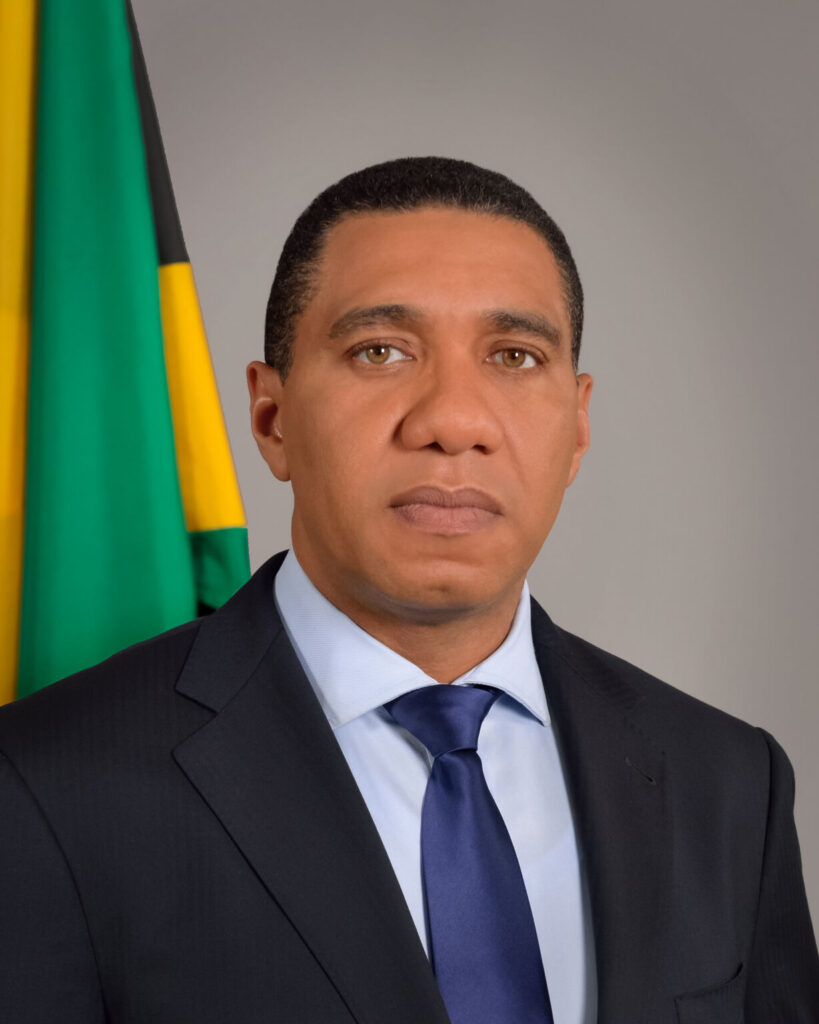
The Most Honourable Andrew Holness, ON, PC, MP
Prime Minister of Jamaica
At the
CARIBBEAN NATIONS SECURITY CONFERENCE (CANSEC) 2023
ROSE HALL HOTEL
ON
WEDNESDAY, JUNE 7, 2023
________________________________________________________________
Thank you, moderator. Good morning everyone. Welcome to sunny Jamaica.
I sincerely apologize for the rains, though locally we are, I must confess, very happy because it could possibly mean a break in our ongoing drought, but allow me to acknowledge our Deputy Prime Minister, Dr The Honourable Horace Chang, Ms Amy Tachco, Deputy Chief of Mission of the United States Embassy in Jamaica, Rear Admiral Antonette Wemyss Gorman and General Laura Richardson, host of CANSEC 2023.
Our Commissioner of Police, Major General Antony Anderson, Chiefs of Defence Staff and Commissioners of Police from across the region, Commissioner Stewart Beckford, Commissioner of the Jamaica Fire Brigade, Lieutenant Colonel Michael Jones, Head of CARICOM IMPACS, representatives of Ministries, Departments and Agencies of the Government of Jamaica, representatives of the CARICOM Secretariat and other regional and international organizations. Senior Defence and Security Officials, specially invited guests, ladies and gentlemen.
Allow me to specially acknowledge a good friend of Jamaica, Daniel Erickson, Deputy Assistant Secretary of Defence for the Western Hemisphere. It gives me great pleasure to join you this morning for the opening of the Caribbean Nations Security Conference (CANSEC) 2023, which is being held under the theme: Strengthening Regional Security Through Informed Action.
Security is one of the greatest challenges affecting the lives of our people and the development prospects of our individual states. In April when I addressed the Regional Symposium on Crime and Violence and Public Health Issues in Trinidad and Tobago, I highlighted the fact that Latin America and the Caribbean have an average of 15 homicides per 100,000 of the population compared to a global average of approximately 6 per 100,000.
It is a reality that our region, Latin America and the Caribbean, is a high-violence region. It is for this reason that we require a strengthened, more informed approach to combat crime and violence in the region and improve regional security.
Our region neither produces small arms, the weapon of choice for criminals; nor do we produce ammunition. Nationally, we have enhanced measures at our ports of entry to interdict illegal weapons; and while these measures continue to bear fruit, the high levels of homicides and shootings signal that more needs to be done, including by producer nations. As we continue to work alongside our trusted US partners, we in the region look forward to significant strides in the control of the flow of weapons and ammunition.
CANSEC represents an important opportunity for regional security practitioners, bilateral partners and partners from regional organizations and academia to have frank discussions on the actions required to change our present reality from a ‘high violence region’ to one that is safe and secure. This annual forum also serves to reinforce our determination not only to work together but also to successfully combat the range of threats and challenges that we face.
The threats to our regional security and by extension our long-term development are multi-faceted and diverse in nature. They include the prevalence of gangs and gang activity; transnational organized crime, in particular drugs and small arms trafficking; cyber attacks, threats to food and energy supplies and of particular concern; significant levels of youth involvement in criminal activities.
Nationally, in addition to these threats, we continue to treat with the negative impact of lottery scamming or advanced fee fraud and the attendant consequence of those activities. Regionally, along with our international partners, we continue to grapple with the means of treating with the continuously deteriorating security situation in Haiti. Let me assure you that Jamaica remains seized of the issues in Haiti and we continue to work assiduously with other nations to assist Haiti to find a solution.
We continue to develop our Good Offices role, two significant components of which are the appointment of an Eminent Persons Group (EPG) of retired Prime Ministers and the facilitation of a consensus-building engagement of diverse Haitian stakeholders in Jamaica from 11 to 13 June. Additionally, we continue to explore how we can assist in the training of Haitian National Police.
Strengthening regional security is a long-standing priority for the countries represented in this room and for various regional and sub-regional organizations; many of which are present for today’s discussions. A key ingredient in strengthening regional security is enhanced cooperation among the states in the region. Time and again, the evidence underscores the vital importance of cooperation and concerted action to successfully address our shared security threats and challenges.
We continue to face the challenge of inadequate resources, relative to the nature and scale of the threats we face, both at the national and regional levels. The unwavering commitment of the persons in this room and those who put their lives on the line daily to achieve and maintain security remains the most important element in the fight against crime and violence in the region.
Today, the efforts of regional security forces, to one extent or another, have been buttressed by more advanced tools and equipment that together, facilitate real-time monitoring of our borders and information-sharing. Capacity and capability building cannot be overlooked. In a number of instances, in spite of these tools, too often, bureaucracy gets in the way.
We continue to encourage the building of partnerships. Information sharing and the conclusion of implementable bilateral and multilateral agreements remain the backbone of our success in the fight against transnational organized crime.
When I addressed the regional security forum, I also proffered that in addition to incorporating more advanced tools and intelligence-driven investigation, we must begin to envision a comprehensive and more complete solution; “one which focuses beyond the symptoms which manifest as crime and violence, to a far deeper analysis of the social, cultural and historical factors that drive aggression; lack of respect for authority, low socioemotional regulation, antisocial behaviour, and a lack of value for the sanctity of life.”
As we contemplate solutions over the coming years, let us not forget the importance of addressing the root causes of crime and violence and the importance of enhancing our partnerships with academia and think tanks, both within and external to the region. These organizations have a significant role to play in helping us to devise implementable and sustainable solutions that treat with the root causes of the high levels of crime and violence that we are currently experiencing.
I take note that this year’s discussions will also focus on cyber defence and the impact of climate change on environmental security, two key challenges that when coupled with the traditional threats to the region, have the potential to further undermine our regional security and development. The focus on these particular issues is also particularly timely. As the small economies of the region continue to recover from the economic fallout caused by the COVID-19 pandemic and put in place mechanisms to transform their economies to use the power of digital technologies, it is important that we understand, prepare for and adequately harden our systems to reduce the impact of cyber threats.
Naturally, capacity building will form an important aspect of these efforts. I am therefore pleased that one of the JDF’s newest centres for the delivery of professional military education, the Caribbean Institute of Cyber Science, focuses on this very issue. We look forward to receiving students, as well as instructors, from across the region to assist in the delivery of critical courses that will enhance this capacity in the region.
It is perhaps fortuitous that we are discussing this matter. At the start of the 2023 Hurricane season, matters related to climate change and environmental security are now at the top of our minds. In this region, we are all too familiar with the astronomical costs to individuals, communities, companies, and the national economy because of the natural weather events such as a hurricane, flood, or earthquake. We must focus on determining the true extent of the impact of these scenarios on the security sector.
At the same time, however, we must begin to examine how security and defence can contribute to reducing their environmental footprint. I look forward to the recommendations emanating from these discussions including how we can infuse planning for disaster scenarios into the annual plan of activities for our defence and security sectors.
Ladies and gentlemen, I do not have to tell this audience that there are no quick fixes in the area of security. Our successes against the threats that we continue to face require an unrelenting focus and commitment on all our parts. It also requires consistent evaluation and analysis to ensure the effectiveness of our efforts; as well as the willingness to correct course when we assess that the measures we implement are not bearing fruit.
It also requires a regular forum for a meeting of the professional minds, so that we can best determine what additional measures may be required to strengthen our efforts from a regional perspective. This is what CANSEC provides.
I want to thank the teams from the JDF and US SOUTHCOM for their efforts in organizing this year’s CANSEC conference. Let me extend my best wishes for your successful deliberations and discussions over the next two days. More importantly, we look forward to the outcome of your discussions which will be an important addition to the approaches being contemplated and implemented across the region.
I commend you once again for your unwavering commitment to regional security and the safety of all.
I thank you and have a good conference.